Anyone born in Canada in the last 100 years should be counted among the most fortunate of people in the world. Canada is a country where hard work and sometimes a little luck will result in a good life. Quite a bit of good luck combined with hard work, some risk-taking and solid decision making can lead to an extraordinarily good life.
As a baby boomer born in the late 1940’s, after the Second World War, my life and career fell in the latter category. Now fully retired it seems appropriate to document some of my experiences. The internet provides that outlet.
I am most proud of what has been accomplished, especially considering never graduating high school. There have been so many fascinating and interesting people over the years that have contributed to my success. My hope is that at least a few young people will glean a nugget of information from some of the experiences to help shape a successful career path of their own.
The following 18 segments are no coincidence, since golf has always played a big part in my life. The inspiration came from a lifelong friend who never quite published a book he was writing titled “Life is like Golf.” It seems appropriate as does the 19th segment of “odds and sods” to be enjoyed while having a beer.
While some personal and family events are woven into these experiences, most private dealings will be left for others to tell at a future celebration of life. A Lucky Man is primarily about my start in life and a career that spanned almost 6 decades.
Ron Liepert
1) The Beginning
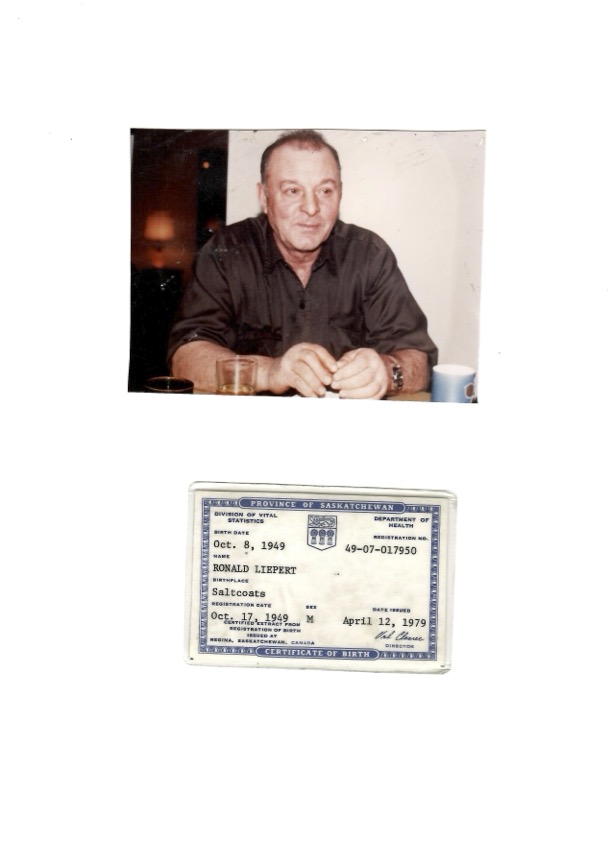
October 8, 1949, Ronald Liepert was born in Saltcoats Saskatchewan to Fred Henry and Helen Elizabeth (Hudak). Fred, of German heritage, was a middle child of 13 with his parents immigrating from Russia with the first 4 children several years before Fred was born in 1920.
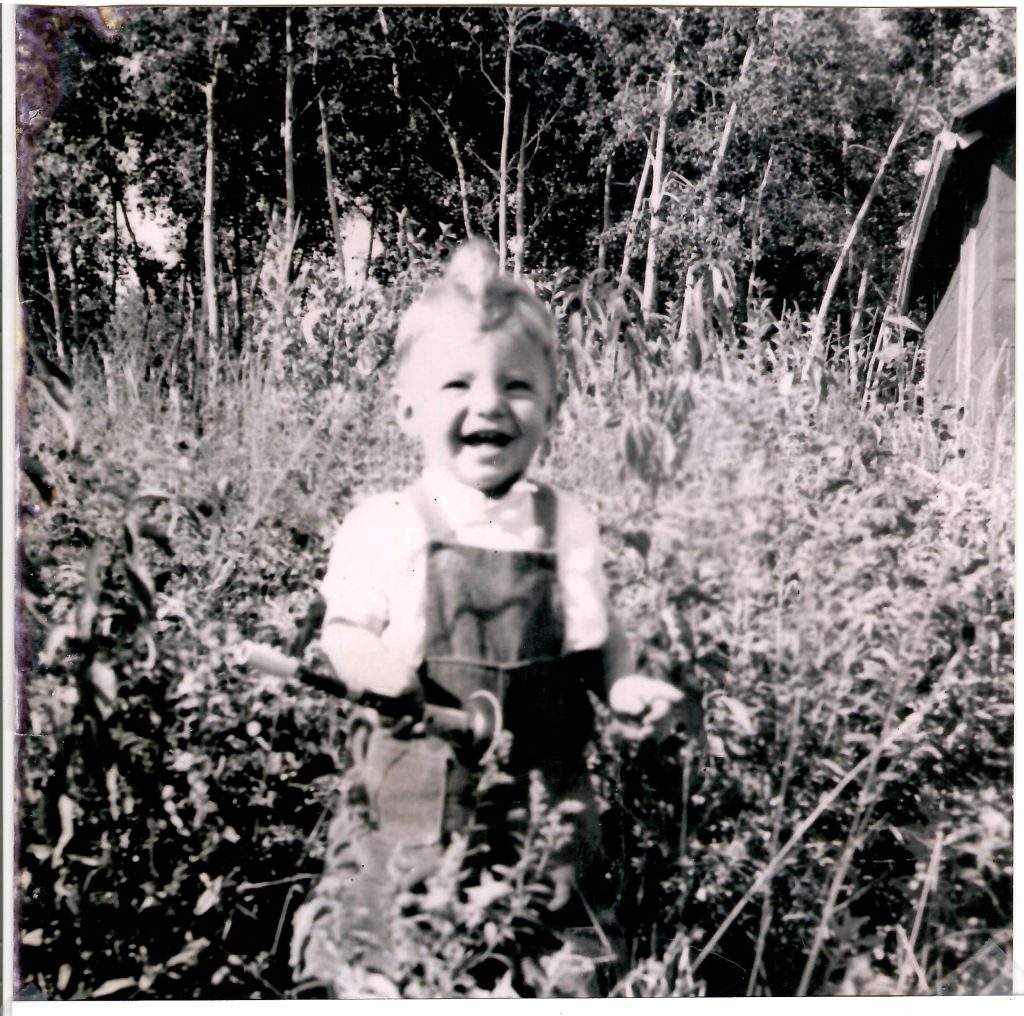
Helen immigrated to Canada from Budapest, Hungary in 1929 when she was 2. Fred spent a few years in the army during World War 2 but never left Canada. Helen was a farm wife, and each had the equivalent of about a grade 8 education.
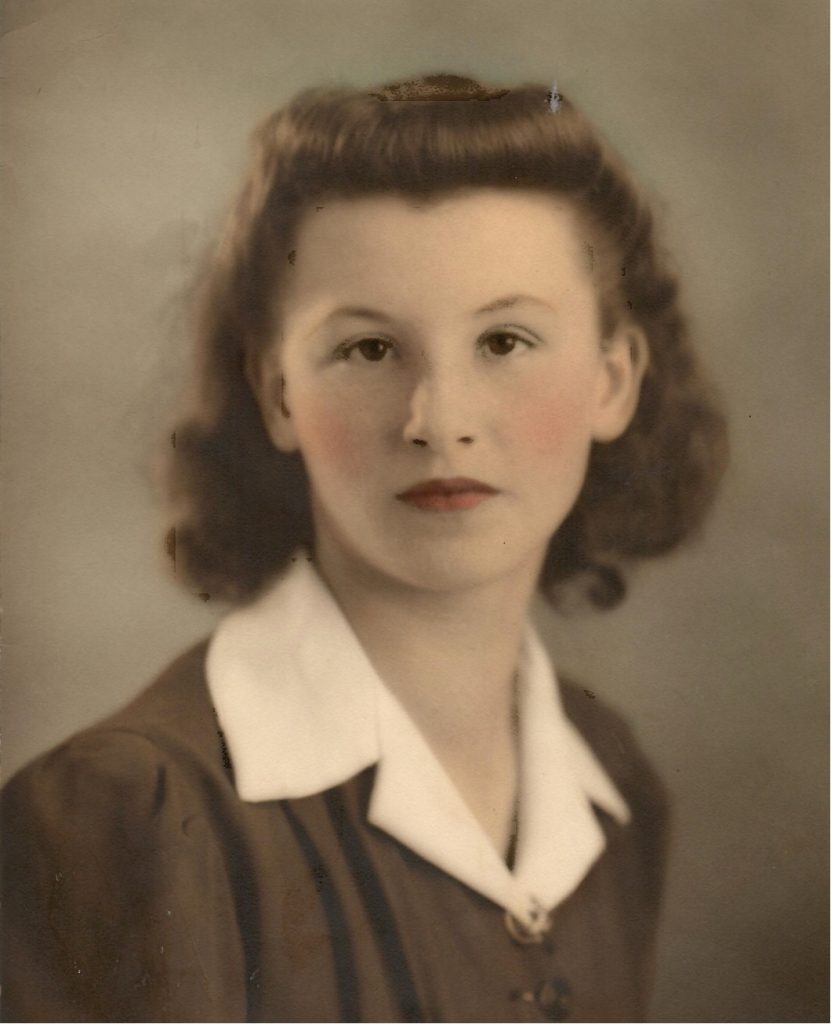
Fred was a nice gentle man but was difficult to get agreement on most things. He was adamant that a middle name was just a nuisance as he often had army cheques made out to Henry Fred and had difficulty cashing them. Hence Ronald Liepert. His stubbornness would play a major part in shaping my career.
Four years after entering the world my sister Judy was born and like clockwork another 4 years later it was brother Dave on September 1, 1957. The 5 of us lived in a small house with no electricity until I was about 15. We had no indoor water or sewer, so it was an outhouse on cold winter nights. This and passing the evening hours away under a coil-oil lamp was a time to forget.
A few years after leaving the army Fred bought a section of farmland 6 miles northeast of Saltcoats, about a half hour drive from the city of Yorkton. As a veteran he had privileges through the VLA to acquire land. This decision was made following their marriage and being away for a year or two working in Ontario picking tobacco, among other jobs.
The section Fred acquired through VLA did not have an acre of cultivated land. His older brother Edward and younger brother Albert had now assumed the home section about 5 miles north of Fred’s land. They helped Fred get established since the farm equipment had been inherited from their parents. Helen’s parents farmed a quarter section across the road from Fred’s land and were also helpful in getting established.
Helen performed the role of obedient farm wife very well. We had around a dozen cows which were milked by hand, a few hogs and about 100 chickens. My mother always had a large garden, preserving a host of vegetables, garden and wild fruit. Very few meals at our house growing up did not entirely come from the land. We sold cream and eggs throughout the year and in the fall, cattle, hogs and chickens as well as grains that were not for animal feed.
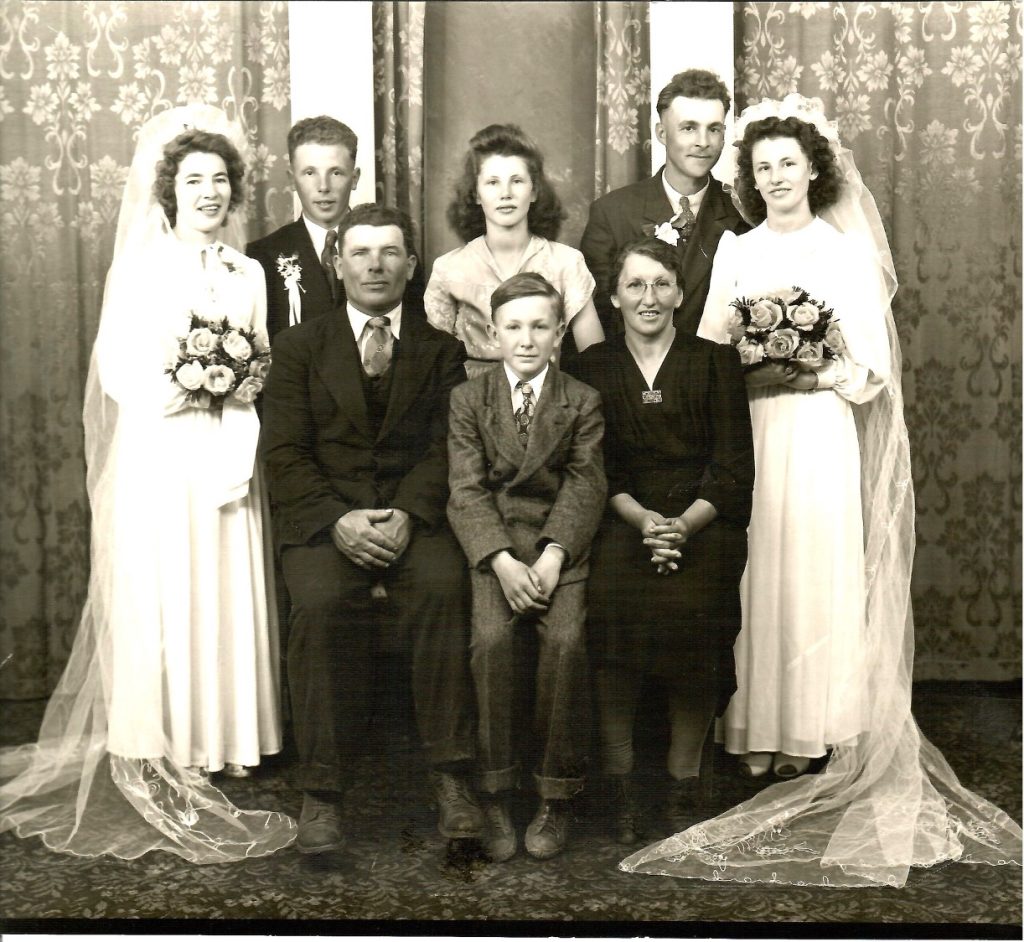
Not surprisingly I don’t remember much of my first 10 years. What I do remember was farm work was hard and money was scarce.
Click this link for additional information on early years and pictures
School Years
I began school about 3 miles from home in the Graham district. Marguerite Bradford was the teacher in a one room schoolhouse for all 6 grades, in total around 30 kids. There were 6 in our class, 3 boys and 3 girls.
Helen Torrie, Linda Trowel, Marlene Toth, Perry Kirkham, Ronald Torrie and I were in first grade. At some point Muriel Willis joined the group and eventually 7 of us went on to take grades 7 & 8 at Saltcoats elementary.
Both Ronald Torrie and Perry Kirkham were skilled students and went on to attain university degrees. However, both returned to the Saltcoats area and farmed most of their lives. Unfortunately, both have passed away. Torrie died of a heart attack the night before a 50th, high school reunion in 2017 and Kirkham several years prior.
Grades 7 & 8 meant taking a school bus to the town of Saltcoats (population 500) one grade per classroom in a school that had approximately 200 students. I don’t recall my teachers in grades 7 and 8 but do recall that school was always a struggle.
Saltcoats didn’t have junior high, just elementary and high school. Our high school was quite modern, especially compared to the elementary school and had students from a wider surrounding area as some rural schools provided grades 1 through 8. I never liked books much but did enjoy the sporting activities and recess.
My entrance to high school coincided with the arrival of a new principal, Mr. Gross. Rumor had it he was fired from a previous role and hoisted onto Saltcoats. Mr. Gross, a nice man but legally blind, was way in over his head. Discipline didn’t exist and chalk fights took place at the back of the classroom throughout his entire math/algebra class. I’m sorry to say Ronald was one of the least disciplined.
Grade 9 was difficult but my teacher Mrs. Lowe from Bredenbury, the next little town about 6 miles east of Saltcoats on the Yellowhead highway, managed to get me passed onto grade 10.
History was a subject that we didn’t have until grade 10, or at least not ancient history. We had a wonderful teacher Mrs. Sinclair who lived early British history 24 hours a day. I couldn’t care less who the King of England was in the 1400’s. I recall scoring 8%, yes 8 out of 100, on the first history exam in the fall of 1964. It didn’t get a lot better as the year progressed and I ended up repeating grade 10.
By this time, I had lost interest in school but passed onto grade 11 although firmly believe a few of us were moved up so we would be that much closer to leaving school behind.
Grade 11 saw a major changeover in teaching staff including a new Principal, Mr. Hrytsak, who many of us thought had served time administering a German concentration camp. The teachers, other than Mrs. Lowe, were all from Yorkton and carpooled each day. Obviously, their attachment to the community was pretty much zero.
At some point during the year, Mr. Hrytsak had a nervous breakdown and had to leave. He was replaced by the local United Church Minister Walter Farquharson who later went on to be the moderator for the United Church of Canada.
By 1966-67 skipping class and not attending school became commonplace. I enjoyed the activities and camaraderie but failed several classes in grade 11 and did not advance to grade 12.
That year the school division also decided that students in grades 10-12 would travel to Yorkton starting in the fall of 1967.
That held no appeal to me and since post-secondary wasn’t an option I decided not to return in the fall of 1967, discontinue my education and find a job. I refer to this as my centennial project.
2) Post school years
In the late 50’s and 60’s several potash operations opened in Saskatchewan, including mines located in Esterhazy and Rocanville, each about a 30-minute drive from Saltcoats. Most guys who did not go to university ended up working at the mine.
I was always reticent about going to work a mile underground every day. The pay was double any other unskilled job in the region and it was a career for life, with a good pension. Another drawback was the mine operated 24 hours per day with rotating shifts which would have interfered with participating in sports activities.
The only other option was farming full-time with Fred who wasn’t about to retire anytime soon. As mentioned earlier we agreed on almost nothing. He refused to borrow money to buy more land or make other improvements. The only future in farming was to expand or work at the mine to supplement farm income.
I had intended to find outside employment in the summer of 1967 but ended up working full time on the farm. After harvest was completed, instead of getting on a school bus headed for Yorkton or applying to work at the mine, it was a Greyhound bus to Calgary and finding a job.
In the late 1960’s several Saskatchewan young men migrated to Alberta after completing high school and found good jobs. I decided to try my luck since there was little work to do on the farm in the winter. My parents gave me $100, bought a bus ticket and dropped me off at the Greyhound depot in Yorkton.
After an 18-hour Greyhound ride I arrived in Calgary and about a quarter of the money from my parents was for a hotel room that night. I had never been to a big city and planned to look in the Calgary Herald for job opportunities the next morning. There wasn’t much for leads in the jobs section. I did one interview and was offered a busboy position at a restaurant but turned it down.
Unable to afford any more nights in a hotel, I phoned my aunt and uncle, Sandy and Clara (Fred’s sister) Rubletz. Clara invited me to their house in Ogden and to stay for a bit while looking for work. I was extremely grateful to them for allowing me to stay at their house.
The next day it was time to look for work, and I went to the area of the old Shamrock Hotel. Several large industries were in this area including Burns Foods where many of the ex-Saskatchewan guys worked but they weren’t hiring off the street. I walked a little further down Ogden Road to Westeel Rosco.
This company manufactured steel door frames for hospitals and other large buildings. After filling out an application form, I was told to show up the next day to start work. I was to find out later that being from Saskatchewan was what got me hired immediately.
Westeel Rosco was probably close to the dirtiest place in the city to work. My job was grinding the weld bead on the corners of steel doors before they were painted. However, it was a job that didn’t require heavy lifting, was indoors for the winter and my supervisor would be happy if the corners ended up smooth.
This seemed like something that could become permanent, but Clara believed I would return to farm in Saskatchewan in the spring. She convinced me to stay in the spare room in the basement and pay $60 per month for room and board. My hourly wage was $1.78 but things were starting to come together, a good paying job and a place to sleep and eat.
As it turned out Clara was right about returning to Saskatchewan, however, for other reasons.
For several years before moving to Calgary, I would wake up in the middle of the night, writhing in pain. It would last for a short period of time, minutes not hours, and then go away. My parents took me to the doctor, and nothing could be found.
The pain returned shortly after arriving in Calgary, but now I was turning yellow. A visit to a local doctor determined I was passing gallstones. This rarely happens to young people, so it was never considered, however the yellow jaundice was now the tip-off.
I needed to have the gallbladder, which produced the stones, removed. In the late 60’s that meant a 10 inch slice up the gut and a month of recovery. I was also becoming terribly homesick and decided going back to Saskatchewan made the most sense, especially since some of my recovery time would be over Christmas. So, in late November it was another 18-hour red-eye Greyhound back to Yorkton.
My operation was successful, recovered over Christmas and within a few days of the calendar turning to 1968 it was back to Calgary. I got a job at CP Rail in the Ogden yards unloading boxcars. It paid more than Westeel and was a 15-minute walk from a small room that I rented in Ogden.
Rather than staying at Rubletzs’, I wanted some independence so entered into the craziest living arrangement, sharing a 2-bedroom basement suite, with an older guy who owned the house. He was separated from his wife who lived upstairs with the kids. I had my own bedroom, but we shared the kitchen and TV room. It was about 5 blocks from my aunt and uncle’s house and could walk to work. Paying only $60 a month and living mostly on a can of spaghetti-o’s every night meant some money could be put aside.
That winter however Fred hurt his back and was pretty much bedridden. I had no choice but to quit my job at CP and return to the farm in the spring.
Fred’s inability to do much that summer kept us from arguing about everything. I worked closely with my uncles and we shared equipment, something Fred refused to do.
As mentioned earlier, Fred refused to go into debt to buy more land or even clear the more than half-section of trees from our farm. A few years after the passing of my grandfather in 1958, Nana decided to sell the quarter section, where they lived, across the road from us. It would have made total sense to purchase the land, but Fred refused and eventually it was sold to my uncle Albert.
While Fred was laid up, I was now farming the quarter with my uncle when it could have been my land for the future. I enjoyed running the operation for the summer, but Fred was recovering nicely and so once harvest was completed it was time to go back to Calgary.
I returned to my old job at Westeel so I could afford something better for accommodation than the previous winter. Well maybe not better but more of it.
A friend from Calgary, Joe Bauer, and I rented the same 2-bedroom basement suite in Ogden. The owner moved elsewhere and rented the entire basement to us. A young family was renting the upstairs and every weekend our suite became party central, mostly because it wasn’t possible to damage anything more than it was already beaten up. A dozen or more guys from high school days were now working in Calgary with more coming every day it seemed.
The job at Westeel was incredibly dirty and after working a full winter grinding, concluded this was not going to be permanent. There is a saying “You can take the boy off the farm, but you can’t take the farm out of the boy” so it was back one more time for the summer of 1969 to try farming.
While another summer working on the farm with Fred had its challenges, larger issues were surfacing.
Farming in the late 60’s was challenging. International grain markets had collapsed and after harvest in the fall of 1969 wheat was still sitting in the bin from the previous 2 years. We were really going nowhere on the farm. My dad had recovered nicely and so in October it was goodbye to Saskatchewan, or so I thought, but this time not on the Greyhound.
My first car
Working an entire winter at Westeel and living in a very affordable basement suite allowed me to save enough money that upon returning to Saskatchewan in 1969 I was able to buy a sleek 1957 red Chevy 2 door hardtop. No longer did I have to rely on the family vehicle to go drinking with the boys on Friday night or to a weekend softball tournament. Now my 57 Chevy was taking me west to start a new permanent life in Calgary, or so I thought.
Burns
With Saskatchewan in the rearview mirror, it was now time to find a permanent job in Calgary. Several of the Saskatchewan boys ended up at Burns Foods mainly because a local guy, Francis Docherty, had worked his way up to a foreman’s position.
Francis would get friends a job at Burns but under one condition, they had to commit to permanent work and not return to Saskatchewan in the spring. The pay was good, everyone belonged to a strong union, and it was inside work. He also made sure we didn’t get the lousy jobs like the killing floor or the coolers packing hinds of beef all day.
He got me a job in the cheese department. Large, almost 80-pound crates of cheese would arrive on a weekly basis and had to be unloaded into the refrigerated warehouse. That was the hardest work but was only about 5% of the week. Most of the work in the cheese department consisted of mixing the 80-pound crates with powdered milk and some other ingredients on an assembly line with soft spreadable cheese pouring into one-pound packages at the other end.
This was a relatively easy job but after a day of dumping powdered milk into a vat, a man in coveralls resembled a snowman.
The other major line of work was packaging margarine. A large tanker would bring vegetable oil to the plant and over time it would be processed into different kinds of margarine.
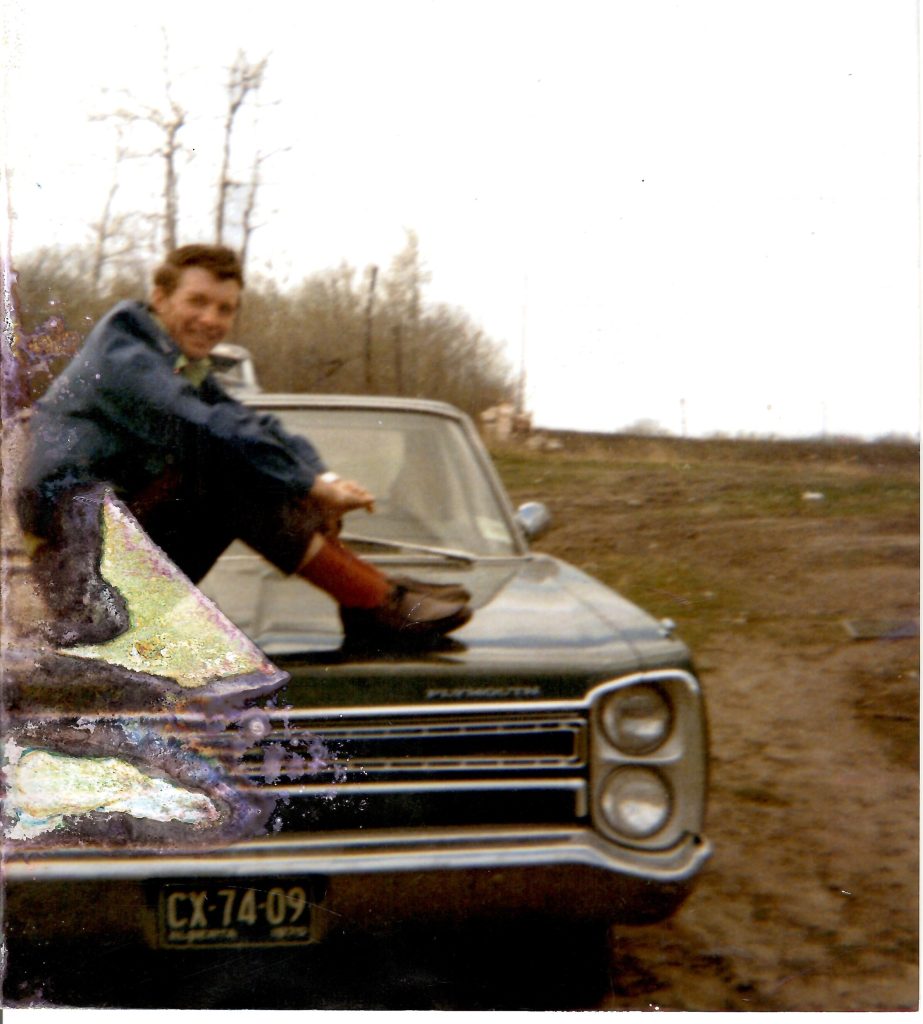
Working at Burns for 6 months meant saving up enough money to buy the car of my dreams, a 1963 Plymouth Sports Fury. It was a two door, console shift, leather interior and purchased from the same Francis Docherty, who wholesaled used cars on the side.
Linda Lelond
In the fall of 1967, staying at Rubletz’s, the only people I knew were my cousins Tom and Sandra. Tom, who was my age, and his friends were interested in cars, drag racing and just about everything I could care less about. Sandra seemed to have only one good friend, Linda Lelond, and they were inseparable. They were 3 years younger than me, and both had very strict early curfews. However, even though they were only 15, I seemed to have more in common with them than the guys.
While sharing the basement suite for the previous 2 winters I renewed contact with Linda. My accommodation was hardly a place that would impress a young lady, so we met a few times at the outdoor skating rink.
By 1970 things were getting a little more serious. Linda had graduated high school and was working at AGT, the telephone company, in directory assistance. These were the days prior to internet and cell phones.
Linda lived at home to save money so even though she was working a curfew remained.
In the summer of 1970, with enough time accumulated for a week’s vacation, we planned to drive the Sports Fury to the coast. I had never travelled west of Banff while Linda had been to an art school in Penticton. Linda was just shy of her 18th birthday, working full time but still living at home. We discussed the idea with her parents, but they refused to allow her to travel with me.
I got along fine with Linda’s parents, even though they were incredibly strict as to what she could do and could not. In some ways, one could see their point of view. They did not know me all that well. The last thing they wanted was a pregnant teenager and grandchild to look after and me disappear.
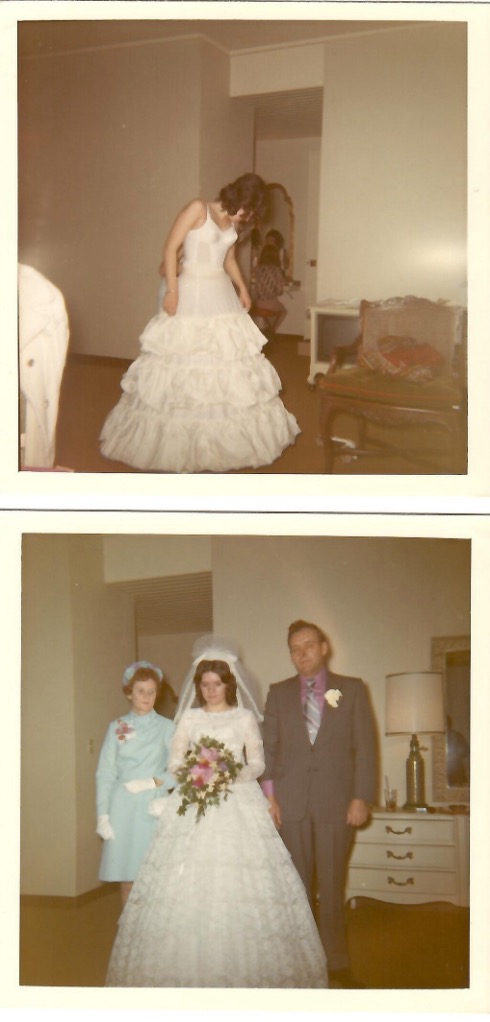
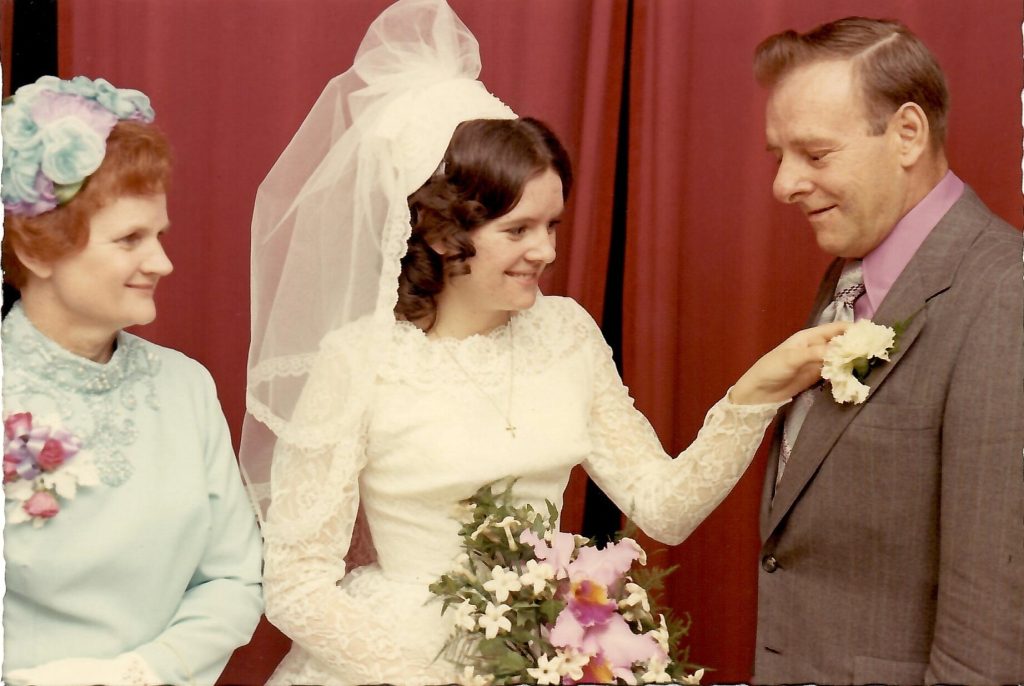
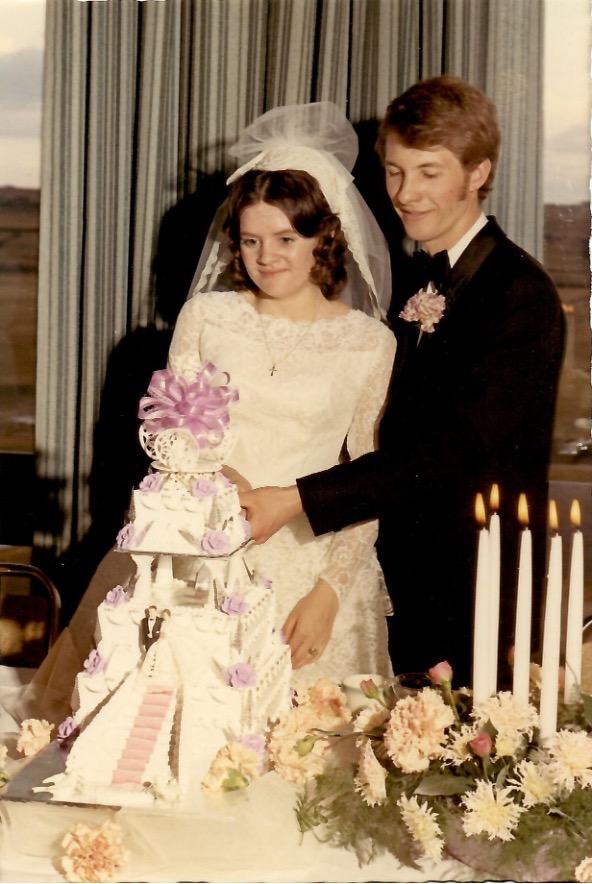
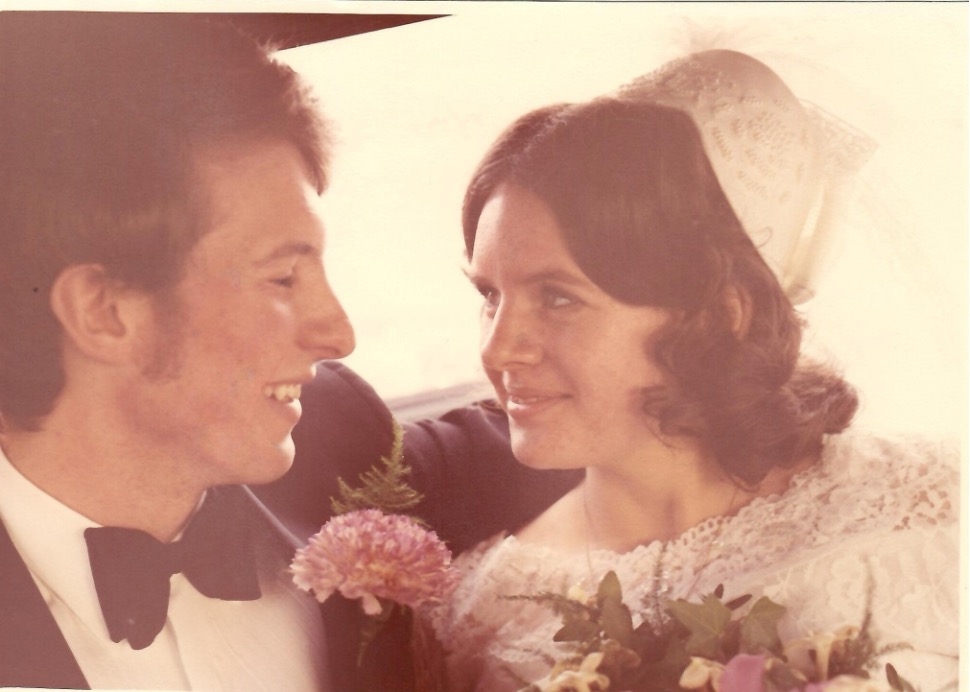
It was this decision however that led to us getting engaged shortly thereafter and married on April 24th, 1971. If we wanted to do things together, and not operate under a curfew, it seemed like our only option. Moving in together before getting married was clearly forbidden and would have likely resulted in an estranged relationship with her parents. We did not want that.
April 24, 1971
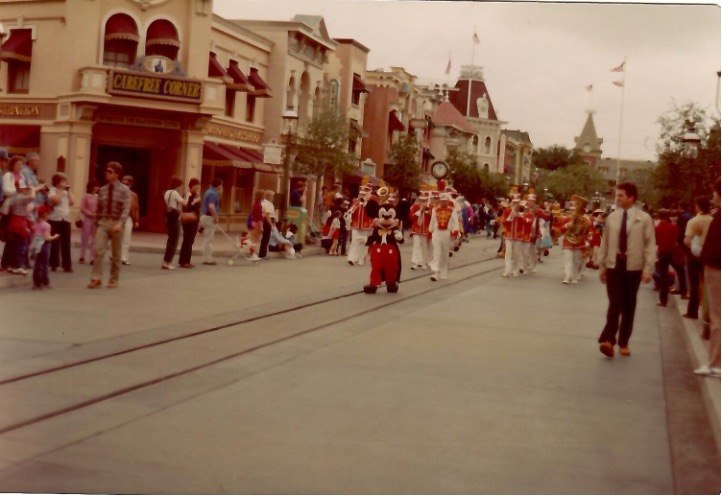
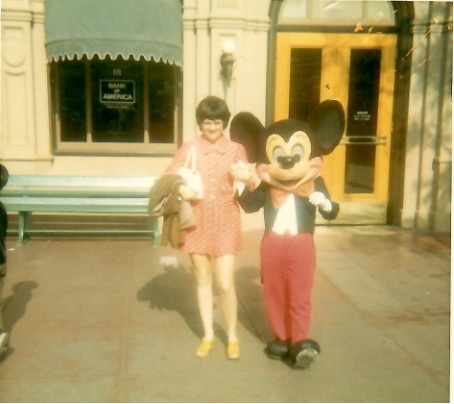
It was a beautiful wedding in Calgary, a nice spring afternoon for pictures in the park and off on our honeymoon that evening. We were still kids, I was 21 and Linda 18, but we headed south in the Plymouth Fury. Our honeymoon meant spending the first night at the Carriage House on McLeod Trail. Her parents thought they were sending her off to sleep with a man for the first time. We then visited the tabernacle in Salt Lake City, attended baseball games (and almost freezing) in San Francisco and Anaheim, Disneyland, Knotts Berry Farm and staying at the Imperial Palace on the strip in Las Vegas. This was a trip of a lifetime that neither of us had ever come close to experiencing in our young lives. However, the credit cards were charged to the maximum. The two weeks went by quickly and it was back to work at Burns & AGT to pay for all this extravagance.
At Disneyland with Mickey Mouse
3) Married life
Since returning in the fall of 1969, I had been living in a very nice basement suite in Northeast Calgary with a buddy from Saskatchewan, Ivan Toth. Fortunately, he agreed to move out, and we stayed in the suite for about six months after getting married.
Even though we both had good paying jobs, money was tight as we had huge credit card bills to pay off. Late in 1971 we found out Linda was pregnant. Obviously, this meant that within a few months we had to live on one paycheque. To reduce costs, we moved from the basement suite to manage a 12-unit apartment building in exchange for free rent. This would be something Linda could do while on maternity leave.
It was now almost 2 years at Burns and work was becoming mundane. I had a wife and baby daughter to support but didn’t want to get in a rut like so many others at the company. If I stayed much longer vacation would increase to 3 weeks and greater seniority would mean less chance of getting laid off.
My motivation to pursue other opportunities was prompted by being sent to work on the ham trimming line one day when it was slow in the cheese department. Ham trimming was a relatively clean job compared to being sent the killing floor.
This job consisted of about 30 guys (there weren’t any women on ham trimming) standing on each side of a conveyor and as the hams came down the belt each person would trim off a piece of fat and throw the ham back on the conveyor. By the end of the line the ham was ready for the smoker.
However, the wake-up call came at coffee break when these 20/30-&-40-year employees only had their annual vacation to talk about. They couldn’t wait to pull the camper trailer to the B.C. Okanagan for anywhere from 4-6 weeks before going back on the trimming line for another 45-48 weeks.
Whether it was trimming ham or making cheese I had reached the point of looking for career options that would be more interesting and challenging.
Columbia School of Broadcasting
One day an advertisement in the daily newspaper caught my attention. Columbia School of Broadcasting, based in the U.S. was offering a correspondence course. This would be ideal for me, not having to quit my decent paying job at Burns or attend Broadcasting or Journalism school. I enrolled in the fall of 1971.
When listening to radio sportscasters, there was no doubt in my mind that I was just as knowledgeable and could do the job as well as most of them. The Columbia course cost almost a thousand dollars, which was a lot of money for someone making less than $10 an hour, however somehow the money was scraped together for enrollment.
I was fortunate to have been born with “a voice for radio.” There were lots of packages back and forth to somewhere in the U.S. Evenings were spent on voice training listening to cassette tapes. Work was submitted by mail, and a response would indicate what I was doing correctly and where improvement was needed. This was an American organization, which continually corrected things like “bin there” not “been there.” I failed that part of the course but didn’t really care since my work would (hopefully) be in Canada not the U.S.
Daughter Kylee
Our daughter Kylee Jo was born May 28, 1972. A healthy newborn is what every parent wants and Kylee was that.
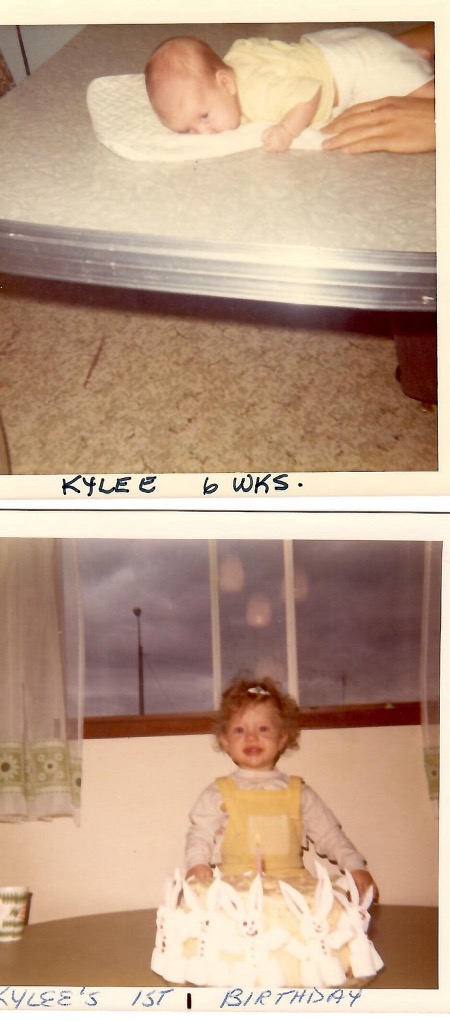
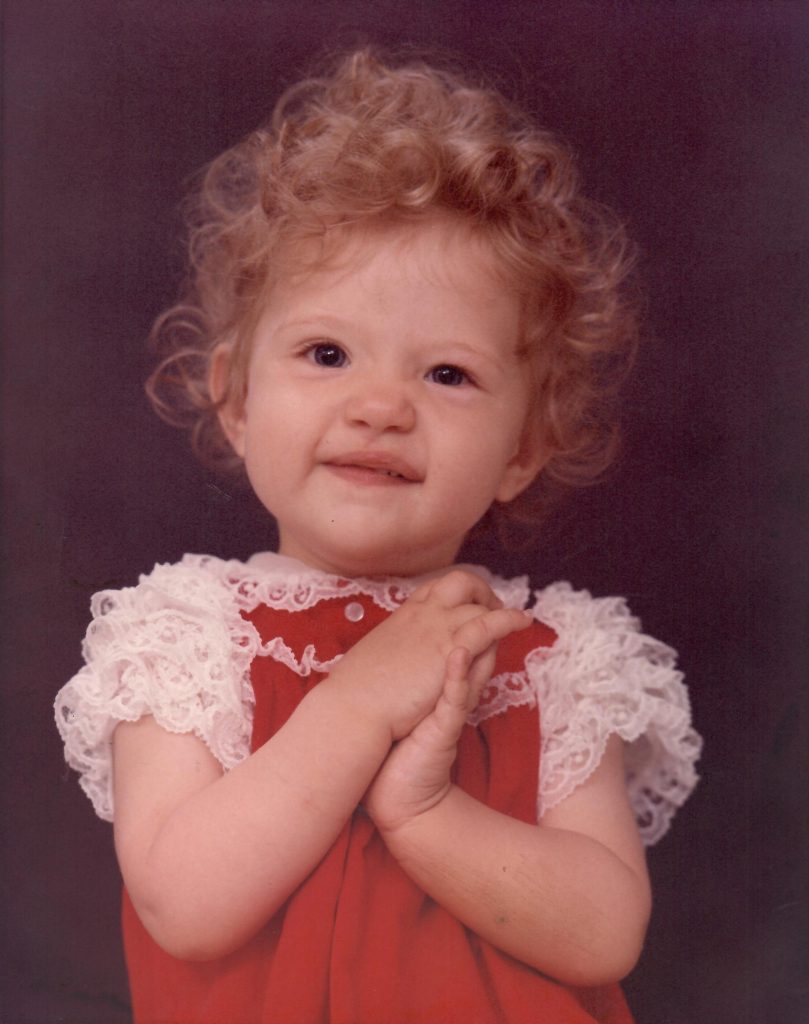
Linda is on maternity leave, managing the apartment building and I had completed about half of my correspondence classes.
The cheese operation at Burns shut down for the month of July and my 2 weeks’ vacation had to be taken during that period. We had no money to go anywhere, and a newborn. So, vacation in the summer of 1972 would be at my parents’ place in Saltcoats and the time would be used to pursue job opportunities in broadcasting.
We drove 12 hours to Saltcoats, and the next day only 2 calls were made to Saskatchewan radio stations. CJGX Yorkton might have been a natural fit but starting my career among former student classmates didn’t seem like a good idea.
After an unsuccessful first attempt, my second call was to Roger Broadhead at CHAB Moose Jaw. He said there was an opening for an evening news and sports announcer and to come for an interview the next day. After a 3-hour drive to Moose Jaw and an interview with Roger, I was hired for the 6 PM to 1 AM news and sports shift, 5 nights a week and Saturday afternoons. August 1st was the start date and pay would be the minimum wage, about $300 per month or a third of what the pay was at Burns.
I immediately drove back to Saltcoats, and we left within a few days for Calgary, stopping in Moose Jaw to rent an unfurnished suite for August 1st.
It wasn’t that I disliked working at Burns, but it did feel good to tell my fellow cheesemakers about pursuing a dream and not getting locked in a dead-end job like most of them.
Once home, notice was provided for August 31st, at the building we were managing, and 2 weeks’ notice was given at Burns. Just prior to the end of July, our possessions were loaded into a U-Haul and I headed east on the TransCanada Highway to pursue my dream.
Farewell card signed by my fellow cheesemakers
Sports
As a kid growing up on the farm there wasn’t much to occupy the mind, so imagination and improvision was required. My dad didn’t place any emphasis on participation in sports so was never enrolled in or driven to baseball or hockey like most of my friends.
We didn’t have electricity until my teens, so obviously watching sports on TV wasn’t an option however almost every Saturday from about 10 years on until farm work needed doing, it would be a ten-mile, round trip bicycle ride to my uncle and aunt’s farm to watch the Major League Baseball Game of the Week.
In the winter I would build an ice rink living the dream of being a defenseman for the Toronto Maple Leafs. Hundreds of pails of water were carried, and a sprinkling can was used to freeze the snow. There was no pressure system, and water was pumped by hand for the first few years.
The rink would measure about 10 paces wide and 30 or 40 paces long, complete with boards to shoot the puck against. Prior to getting electricity, one could only hope for a crisp clear evening to play under the light of the moon.
With a friend, and local farm kid, Bob Devins a men’s softball team, was organized to compete in local tournaments in 1965. We were all 15 or 16 years old and the only real man on the team was our schoolteacher Glen Frank, who played second base. We were blessed with a tall strapping classmate Darrell Shaw, who was a windmill pitcher however each Sunday our team was one and done in tournament play. However, in the next couple years we managed to win some money and even a tournament. This team continued each summer until I began permanent work in Calgary in 1970.
I also started collecting sports memorabilia at an early age and still have sports magazines from the 1960’s and baseball cards from the same era.
While sports was always my primary interest: being an avid baseball fan; a pretend NHLer; an organizer of Sunday football with neighbouring farm kids; and a Sunday softball player were not going to result in a career. However, these early days of collecting, organizing and dreaming would pay dividends in the future.
Life in Moose Jaw
I was 23 years old, arrived in Moose Jaw, knowing not a single person. It meant unloading the furniture myself, dragging a sofa, bed and other belongings up 2 flights of stairs. We picked a nice one-bedroom apartment but only had about $50 left at the end of the month after paying utilities, rent and buying groceries.
Monday morning, July 31st, it was off to CHAB, ready to start work. Roger Broadhead was the program manager at CHAB who interviewed and hired me for the news and sports position. It didn’t take me long to figure out why. The News Director, Reg Nieszner, would have scared away any good quality people.
I remember almost nothing about my first day at work but knew instantly that my new boss was a creepy jackass. Training consisted of turning on the microphone and how to rip news items off the wire service. My first newscast was at 7 PM August 1st, 1972.
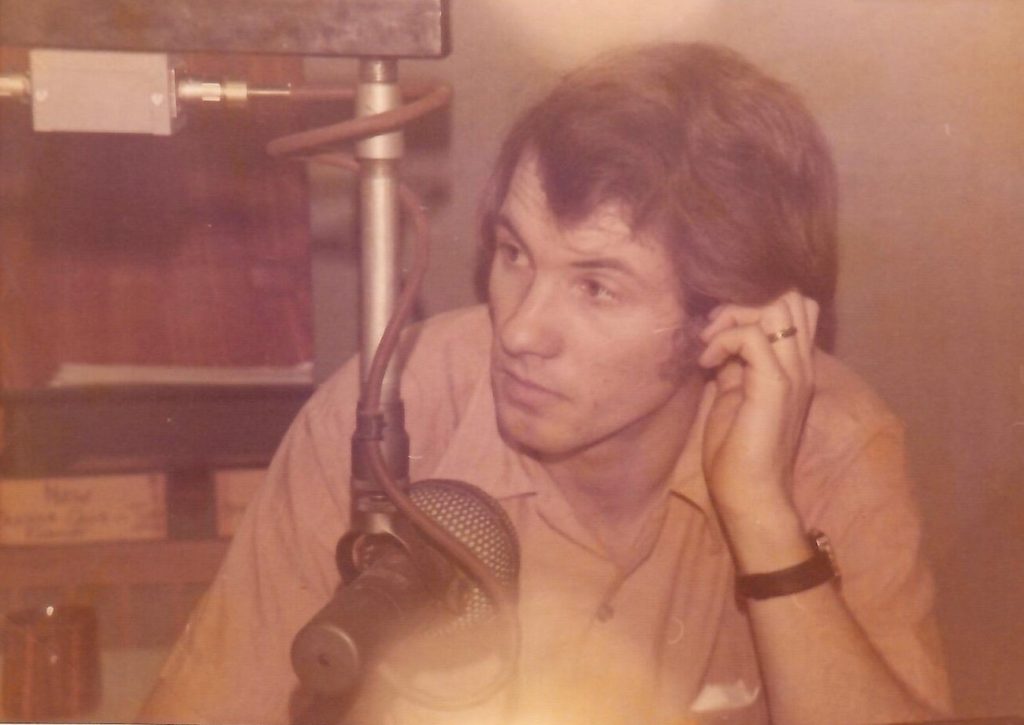
Pressure can come in many different forms, but there are few things that could rival reading an on-air newscast for the first time. I have always tried to remember and learn from mistakes but have no recollection of reading the news for the first time so things must have gone quite well.
To this day I remember Reg Nieszner. He was overweight, bearded and resembled a Hell’s Angels biker. There was nothing good I could say about the guy. My shift was 7 PM until the station signed off the air at 1 AM, Monday to Friday and Saturday afternoons. These were the days before syndicated newscasts.
Knowing only a few guys at the radio station and working long hours meant another experience of home sickness for the month of August. This one was different, however, because it wasn’t my parents and siblings that I was missing but rather my wife and newborn daughter.
Living alone, with Linda and Kylee still in Calgary for the month, I secured a part-time job delivering furniture in the afternoon. The pay at CHAB was so poor that the extra cash was needed for when they arrived at the end of the month. I also had the entire day to myself, that was until that fat, lazy jackass scheduled court coverage each weekday morning from 9 AM to noon with no extra pay. This was something he had been doing.
Before the end of August, it was back to Calgary, picking up Linda and Kylee and getting settled in the apartment in Moose Jaw. It didn’t take long before Linda got an administrative job at the Moose Jaw hospital. She liked the work, we had a great lady looking after Kylee and Moose Jaw people were friendly, however money was very tight.
This now meant getting to sleep around 2 AM and up with our daughter around 7 AM. My day started at 9 AM at the courthouse until noon. Then it was moving furniture from 1 PM until around 5 PM and finally heading to the radio station for my real job being a news and sports caster from 7 PM until 1 AM.
On Saturday’s I only worked the afternoon shift and had Sunday’s off. Even though the working hours were brutal this was the broadcasting experience needed but wasn’t a pace that could be maintained long term. Even though my hours at the radio station allowed for little interaction with the news director, the day couldn’t come fast enough to see him in the rearview mirror.
It’s now early December, still doing triple duty and not as glamorous as anticipated. The only pay raise was when the Saskatchewan Government increased the minimum wage.
One day an advertisement appeared in a local newspaper. CFCW Camrose, Alberta was looking for an evening newscaster. I called the number, spoke to the News Director and was hired over the phone to start my new job on January 2, 1973.
We were just getting settled for the winter months in Moose Jaw and it was probably too soon to change jobs, but this gave me an opportunity to get back to Alberta. Few things in life have pleased me more than to hand Reg Neizner my resignation letter. While I have nothing good to say about the man, at least he motivated me to move on and advance my career.
CFCW
Not starting in Camrose until January allowed our family to spend Christmas in Saltcoats. We then went back to Moose Jaw, loaded all our belongings in a U-Haul and headed to Camrose.
Camrose was a nice little city, population around 10,000, a one-hour drive southeast of Edmonton. Moose Jaw was a city of around 40,000 people and Linda was born and raised in a city of half a million so driving into Camrose was quite a shock. As we drove into Camrose Linda started to cry. In some ways the crying never stopped for 2 years.
January 2nd, I meet my new boss, Mike Goetze. A German immigrant with a dark black goatee and all business. My immediate thought was “what have I gotten myself into?” Having just left a situation, where I hated my boss, and now this guy whose face would crack if he smiled.
My salary increased 25%, up from the $300 range to $400 plus per month, but my shift was almost the same as Moose Jaw and Linda hated the place.
Mike had a sidekick named Bill Tuele, an ex-army guy, who was the station’s sports expert and read the news in the afternoon.
Many first impressions turn out to being wrong. Mike Goetze was as tough as nails but if you did your job and accepted constructive advice, he was great to work for. He was a perfectionist and a stickler for the English language, the one subject in school that I was quite good at. Mike recognized this, mentored me and today still find myself correcting imperfect English on Television News broadcasts.
It didn’t take long to discover that Mike was a baseball fanatic. That changed our relationship entirely and work became fun. We knew more about baseball than Tuele, or any of the sports guys on radio and television.
After about a year of evenings and Saturdays, boredom started to set in. Most of the on-air guys had long careers with CFCW and it didn’t appear as though opportunities to advance would come anytime soon. Moving to another radio station wouldn’t pay anymore or offer much more in the way of opportunities so it was time to consider leaving the business.
An opportunity presented itself to move to Edmonton into the grocery business selling sausage to grocery stores. However, as fate would have it, Mike asked me into his office when I arrived to begin my evening shift one day in early December. He said my performance had been excellent and was promoting me to the afternoon news and sports shift with Tuele moving to Edmonton to establish a presence in the capital city.
This was the breakthrough I had been hoping for and even though Linda did not like living in Camrose there was no way being a sausage salesman was going to win out over reading the mid-day news and sports in a major market.
Tuele had been in Edmonton for about a year covering mostly sports events and city hall. Occasionally when time allowed, he dropped in to cover the Alberta legislature.
In March 1975, Peter Lougheed won a massive majority, the first election after defeating Social Credit four years earlier. CFCW was making headway in becoming the “Country Music Giant” of northern Alberta, including in Edmonton. Mike felt the one area lacking coverage was the provincial legislature. He made the decision to add another person based in Edmonton, at the legislature, and the role was mine. Again, an advancement that couldn’t be turned down.
Click here for more on working at CHAB and CFCW, living in Moose Jaw & Camrose.
Mike and I had formed a kinship primarily around baseball. To add interest to the season we began to wager on every game. We would alternately choose games each day and over the course of the season one guy would end up winning $20 and then loose about the same amount the next year. This went on for almost 20 years. We would have a phone call a couple times a week, regardless of where I was living and working.
Over a lifetime there is always an occasion when you get “kicked in the gut or lower” and it hurts like Hell. On the morning of July 26th, 1995, I was working for TELUS and made the daily call to Mike to do the baseball picks.
Dale Smith answered and I asked to speak to Mike, who never missed a day of work in his life. There was a short silent pause at the other end of the phone. Then Dale responded, “Mike passed away last night.” The silence at my end lasted quite a bit longer. This could not be true. He apparently suffered a major heart attack sitting in his chair watching TV.
His death was only months after my own father’s passing but had way more impact. Here was this seemingly healthy 51-year-old man suddenly gone.
I asked General Manager Warren Holte at the funeral if there had ever been warning signs and his response was “who would know because Mike refused to go see a doctor.” I have not missed an annual check-up since that day.
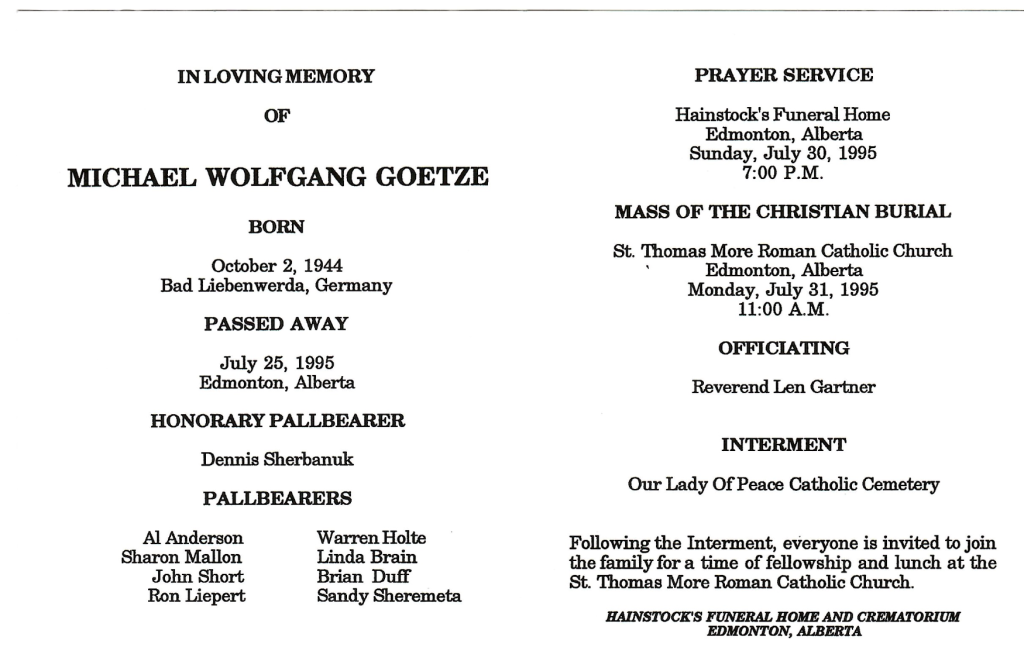
In 1973 Mike organized a baseball pool. The tradition carried on after his passing, and it became known as the Mike Goetze memorial baseball pool. 2026 was the 53rd consecutive year of my participation.
I enjoyed my time in Camrose, but Linda hated it. I grew up in small town Canada so understood the cliques that always exist but as a big city girl she could not break through that culture. Camrose was also a Scandinavian community where everyone had close family ties.
Linda did attain a good job with the Alberta government. As part of decentralization the Agricultural Development Corporation (ADC) was being transferred to Camrose from Edmonton. For six months a group of Camrose residents carpooled to Edmonton each day until the offices were permanently moved. She worked at ADC until we left in 1975.
One pacifier for Linda was building our first home. We bought a beautiful piece of property overlooking an area that today would be deemed “environmentally protected” and the city golf course in the distance. We built the house for somewhere in the range of $35,000. A 3-bedroom bi-level with shag carpet.
Reading the Saturday morning news after a peaceful summer walk at 5 AM, along Mirror Lake, with only the sound of birds chirping, reminded me of being back on the farm.
My career in broadcasting was now well established and returning to the farm was not an option. My brother, who was only 16, did not express any interest in taking over the family operation so in 1974 my parents sold the home stead and moved to the Yorkton area.
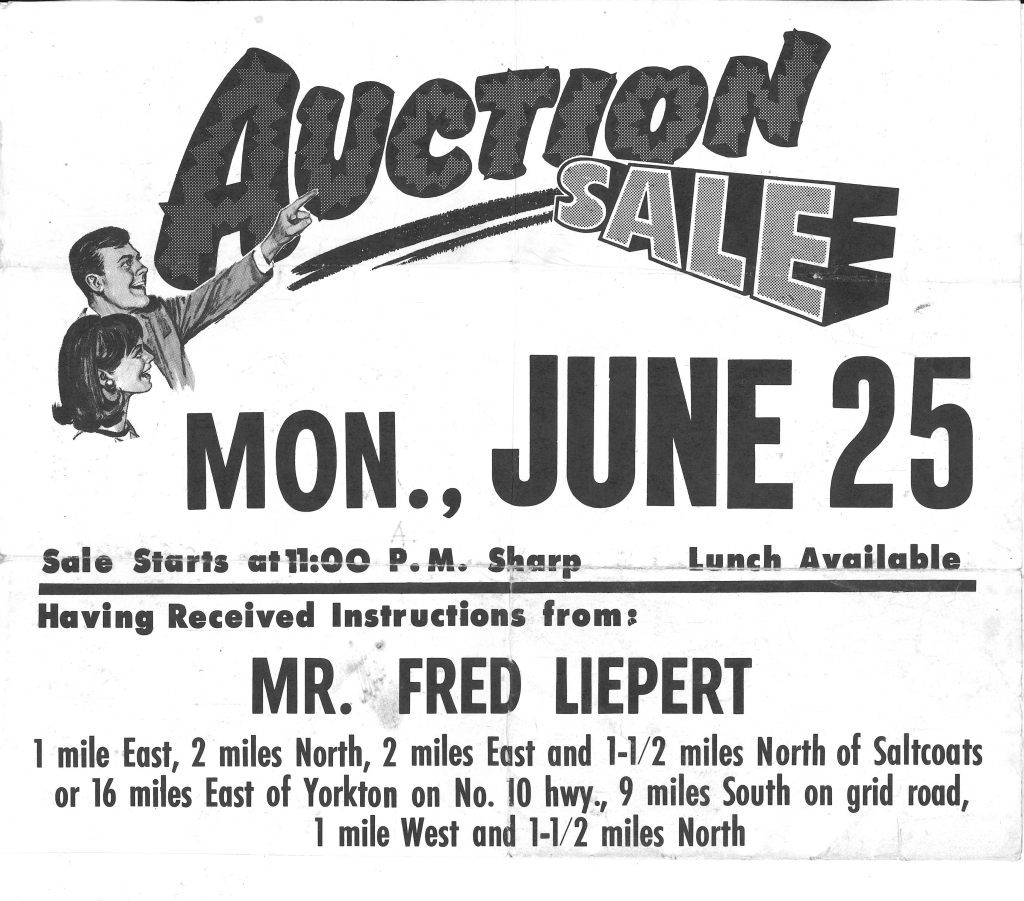
4) Edmonton Bound
Moving to Edmonton early in 1975 meant going from occasionally covering Camrose City Hall to full-time reporter at the Alberta Legislature. These were also the days of two finger typewriter reporters, but it was factual news reporting.
Peter Lougheed had been Premier since August 1971 and was just re-elected with a massive majority. The deans of the Press Gallery Kevin Petersen, (Calgary Herald) Bob Bell, (Edmonton Journal) and Al Scarth (Lethbridge Herald) were around the building well before Lougheed swept Social Credit out of office after 36 years. They had the analysis of each government bill and announcement covered.
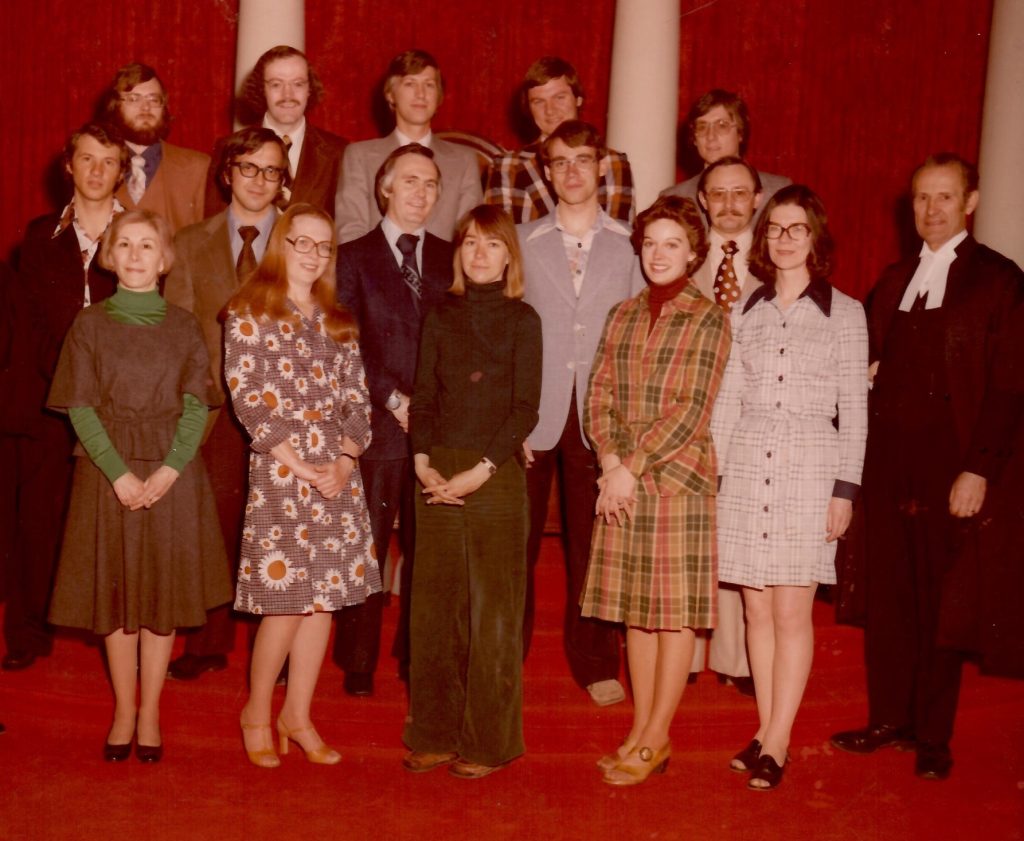
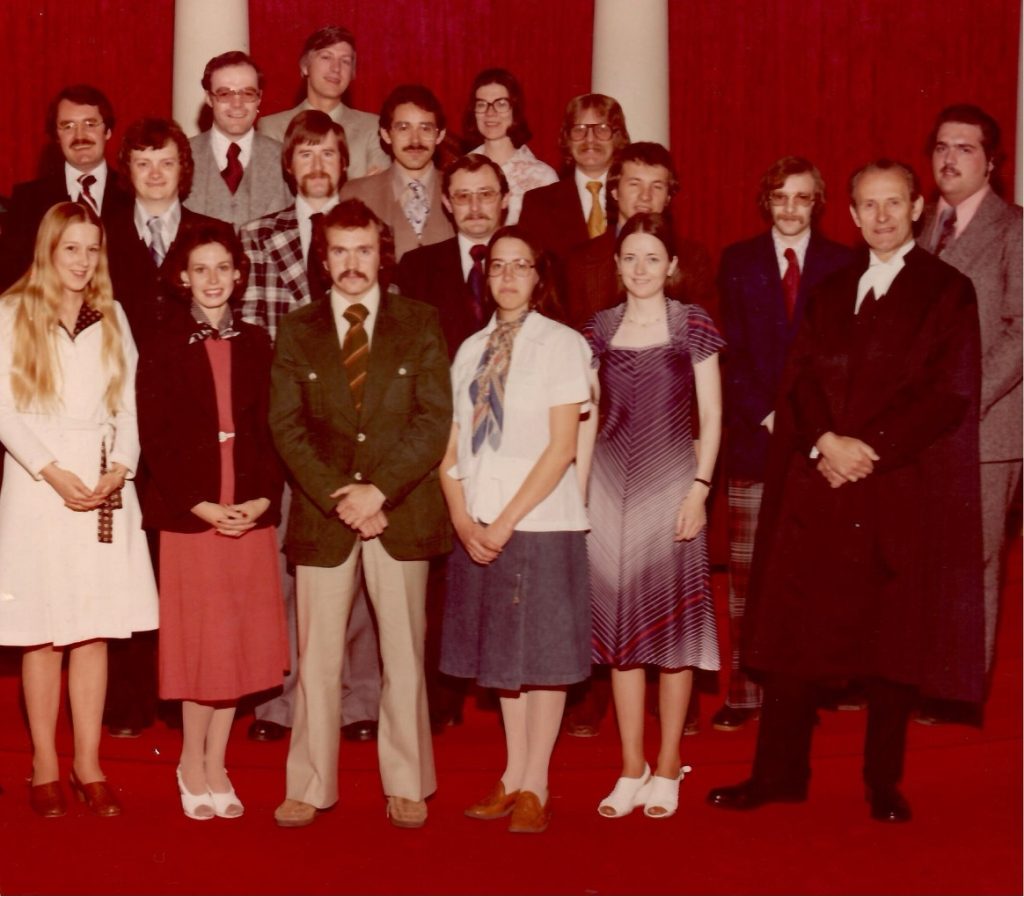
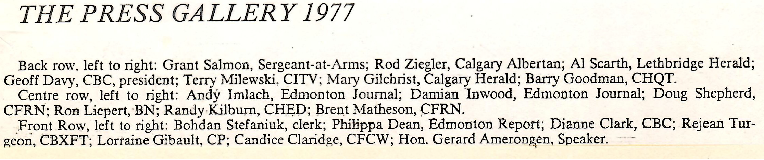
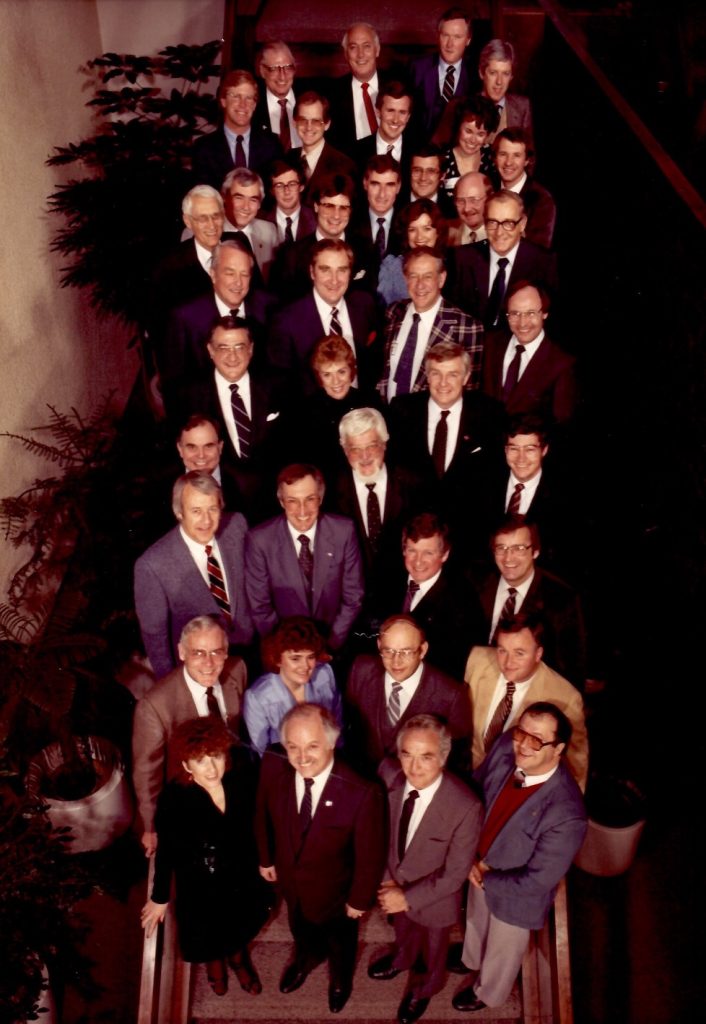
Members of the first Press Gallery in 1966. Unfortunately I can’t recall everyone’s name but those I do remember are front row Olive Elliott, Edmonton Journal (second from left) and Gail Lobay, CTV (second female from right), second row, myself, CFCW, Gordon Jaremko (Calgary Herald), Stan Ravendahl (CHED), Harry Shute (several rural stations) and Doug Shepard (CTV), back row Al Scarth, Lethbridge Herald (second from left), Geoff Davey (CTV), Jim Armet (Broadcast News) and Len Grant (ITV)
Lougheed ran a very clean, tight ship and the opposition consisted of four Social Credit MLAs whose political views did not differentiate much from the government and newly elected Grant Notley of the NDP. Any reporter wanting to do investigative journalism was headed for a starvation diet. I had to find a niche?
Country music listeners to CFCW, an agricultural radio station covering a large swath of northern rural Alberta, weren’t interested in the same news coverage as the city newspapers, television and radio stations.
I spent the first months in Edmonton getting to know personally every cabinet minister who represented communities within CFCW’s broadcasting region. Lougheed’s Deputy Premier was Hugh Horner from Barrhead, north of Edmonton. Rural ministers were integral in decisions reached at the cabinet table. Building trusted relationships with Cabinet Ministers and MLAs paid dividends both for them and me. It also didn’t hurt being raised on a farm in rural Saskatchewan and understanding many of the issues.
Ministers quickly realized that having their announcements on our station was good politics back home. Trust soon developed and I would receive a call from one of the minister’s offices giving advance notice of an announcement that was forthcoming. It was treated in confidence, but all the pre-recording and interviews were done in advance, so when the announcement was being made in the press room my report was already the lead news item on CFCW. Mike Goetze paid close attention to other radio station newscasts and quickly recognized CFCW was beating them to the story.
Softball/fastpitch was a passion since my high school days. I played competitively before leaving Calgary, one year in Camrose and now in the Edmonton area. Premier Lougheed and several of his ministers also loved sports. For several summers I organized a slow pitch game between members of the legislature and the press gallery. A person never knows what role that decision may have played later in life.
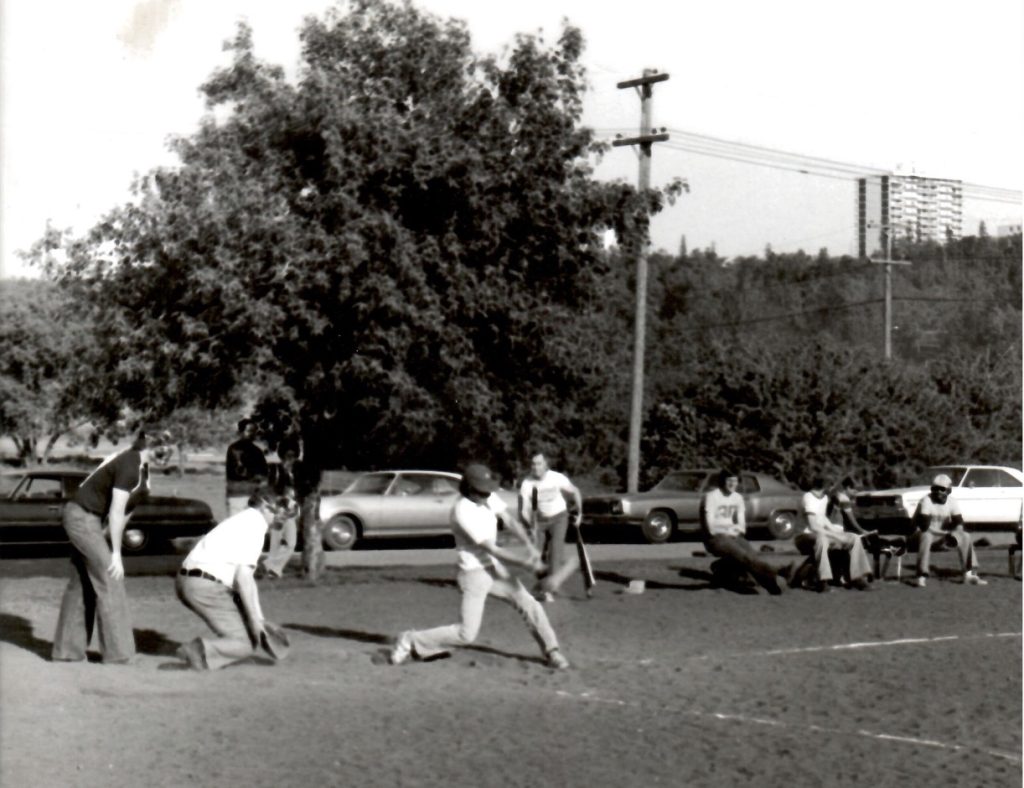
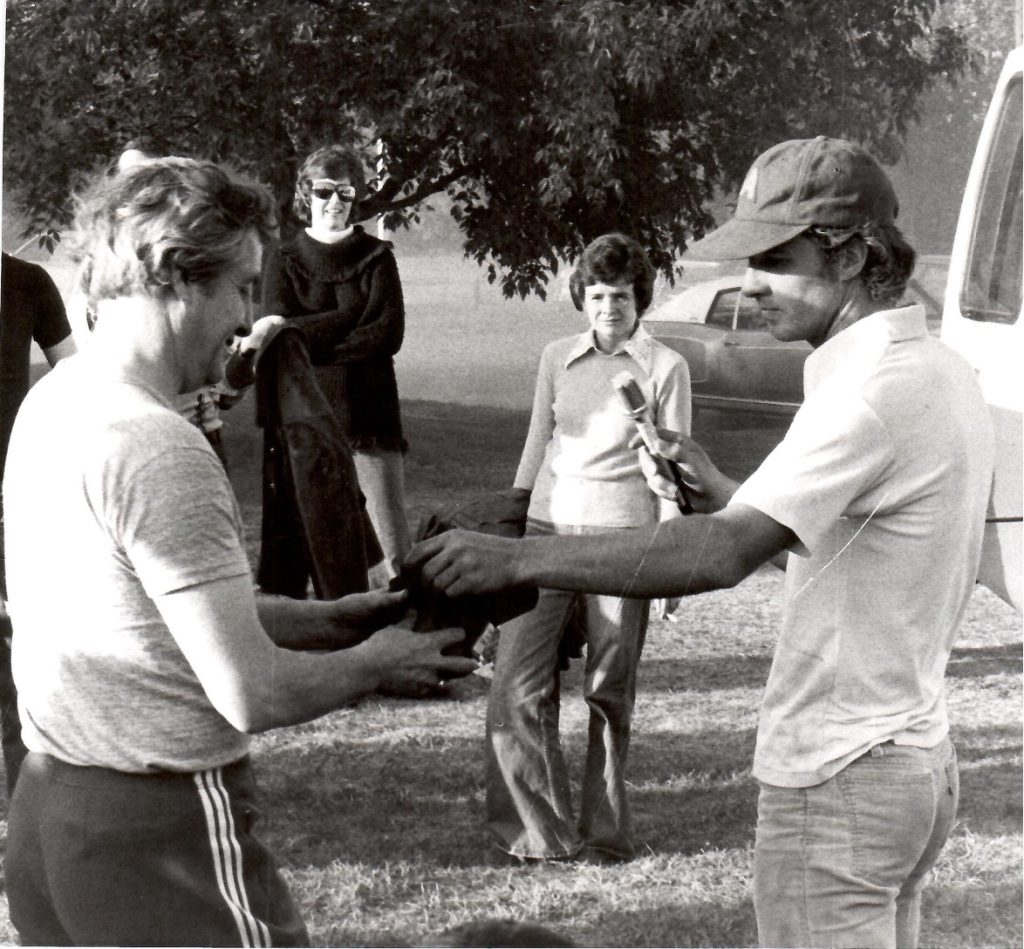
Late in 1976, Jim Armet who was the legislature reporter for Broadcast News (BN), decided to leave broadcasting and take up farming in east central Alberta. BN was the audio arm of Canadian Press (CP). Radio stations across the country subscribed to Broadcast News and ran audio clips on their newscasts. Jim and I developed a friendship, and he recommended BN hire me as his replacement. I started working for BN on December 1, 1976.
Covering the legislature for CFCW was a dream job but moving to Broadcast News was my next big break.
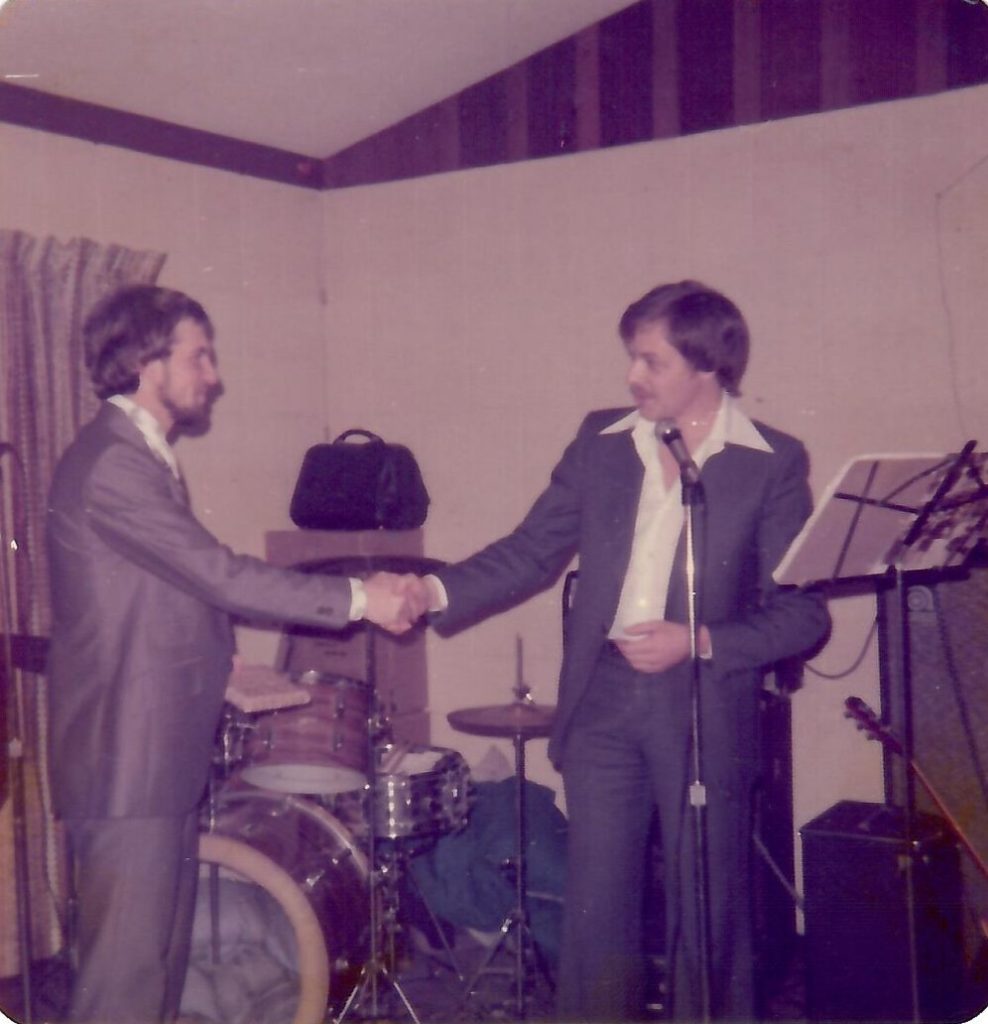
Just prior to accepting the position at Broadcast News, I received a telephone call from Peter Tadman, News Director at CITV. He was interested in having me join his news team. CITV Edmonton officially went on the air in September 1974 and was challenging CTV & CBC for local audiences.
Moving to television was tempting but so was the opportunity to work for a national network. I decided to accept the position with Broadcast News however Peter left the door open to join CITV in the future.
Broadcast News provided me with tremendous opportunities to travel the country and report on Premier’s conferences and royal visits.
The first major event I was assigned to cover for BN was the visit of then Prince Charles (now King Charles) to southern Alberta in July 1977. The week fighting the paparazzi at news conferences will always be remembered.
My first national assignment was the annual Premier’s conference in August 1977 in St. Andrews by-the-Sea, New Brunswick. Again, it will always be remembered for the strangest of reasons. (Click on link at end for the story)
I covered three First Minister’s conferences in 1978. Pierre Trudeau had now been Prime Minister for 10 years and tension was rising between the provinces and the federal government. Quebec separation was also on the front burner.
Reporters from around the globe descended on Canada’s Northwest Territories in January 1978 when a nuclear-powered Soviet reconnaissance satellite broke up and scattered radioactive debris over 3000 kilometers. I travelled in a Canadian Forces Hercules with dozens of journalists from around the globe experiencing Yellowknife in January.
I was also accredited to cover NHL and CFL events when warranted for national audiences.
Working for Broadcast News was another dream job that ended for one reason.
Jim Armet reported to Graham Trotter, the Bureau Chief of Canadian Press in Edmonton. Initially so did I, a relationship that worked well. CP head office in Toronto, however, decided to send a guy named Jerry Fairbridge to Edmonton as regional manager for Broadcast News which had one employee – me.
This little wimp had no managerial abilities or for that matter anything positive to contribute.
I had 3 years’ experience working in newsrooms and had a good idea of what news directors wanted from a national service. They wanted quality over quantity and not news feeds cluttered with endless material.
Jerry Fairbridge wanted quantity to meet some artificial quota he had established. He also wanted me to become more abrasive focusing on investigative journalism. My success was built on relationships and respecting confidentiality. That wasn’t about to change.
I worked for several people over the years but none as incompetent as this guy. However, like my situation at CHAB Moose Jaw, being encouraged to leave by the boss worked in my favor.
The issues with him were never going to be resolved and so in March 1978 I moved to CITV to do television news for the first time.
Now with six years’ experience working in radio, it was time to move to television reporting.
CITV
Dr. Charles Allard was a renowned Edmonton physician and entrepreneur. In 1973 Allarco, his holding company, was granted a television license for a third station in Edmonton. These were the days before cable TV and access to U.S. networks, not to mention specialty channels, streaming and all the rest. The station went on the air in September 1974.
CITV was a new entry into the market and there was a culture of creativity but the news department, under Peter Tadman, remained very conservative. There was no full-time legislative reporter but two individuals, who were much more interested in attempting to uncover scandals and would only show when an announcement was being made.
The reputation of CITV with the provincial government, mainly because of these two colleagues, was extremely toxic. I immediately brought a reputation of trust and planned to cover the legislature in the same manner as in the past, focusing on issues important to viewers.
After one year in the legislative press gallery with CITV, Premier Lougheed called an election for March 14, 1979. Lougheed won his third majority by the largest margin yet and it was 4 more years covering a government with a very weak opposition.
Sensing my frustration, Peter Tadman appointed me Assignment editor in charge of the evening newscast. The assignment desk seemed like a perfect fit for my skillset, since CITV was attempting to differentiate itself from the other two established networks by focusing on local news.
Things were going well and as year-end approached, I couldn’t imagine anything that would make me leave. Then it happened, between Christmas and New Years, a phone call from Bob Giffin, Chief of Staff for Premier Lougheed.
(Click link here for more experiences working at CFCW/Broadcast News/CITV and adopting Cody)
5) News Secretary
Over the 4 years covering the Alberta Legislature I also developed a relationship with the Executive Director of the Progressive Conservative Association of Alberta, Bob Giffin. He knew how important rural seats were for the PC party and trusted me with information that could eventually be used for the rural audiences. After the March 1979 election Lougheed named Giffin his Chief of Staff.
Just prior to Christmas 1979, Press Secretary Joe Hutton announced that he would be leaving the role that he held since Lougheed assumed office in 1971.
Around dinner hour on a snowy late December evening, I received a call from Giffin encouraging me to apply for the position of News Secretary to the Premier.
Early in the new year the Premier and I met on a Saturday morning in his office at the Legislature. About all that can be recalled was the Premier’s final question. He asked if there were any issues with the philosophy of the Progressive Conservative party. My response was that while there were no philosophical differences, I had never voted for his party in a provincial election.
We lived in the riding represented by Social Credit MLA Walter Buck. I indicated that Walter did a good job as an MLA and the PC party always had poor candidates. I was told years later that my honesty clinched the job in the Premier’s mind because he was being told what he needed to hear.
I began work in the Premier’s office March 1, 1980, at age 31. Looking back now, I was probably too young at the time to appreciate what a great opportunity this would be. I had no previous party affiliation, did not graduate high school and was not born and raised in Alberta, like almost everyone surrounding the Premier.
The Progressive Conservative party (PC) had just won a resounding mandate one year earlier but there were many grey skies and cloudy days ahead. Pierre Trudeau had come out of retirement to defeat the short-lived Joe Clark administration. He had two goals in mind before retiring permanently. The first was to re-patriate the constitution (the British North America Act) and the second was to ensure Canadians had very inexpensive oil. In both situations it was centralizing power in Ottawa.
Within weeks of assuming the role, Alberta hosted the annual Western Premiers conference in Lethbridge. I was responsible for the media as Lougheed was the host Premier. My first real taste in conflict was with two of the most acerbic personalities, Allan Fotheringham and Jack Webster. I denied Fotheringham access to an area he felt a God given right to and was written up in the Toronto Star. Webster wanted to host all four Premiers in an interview. The request was denied and Alberta took the blame. These two experiences quickly hardened me up for what was to come over the next four years
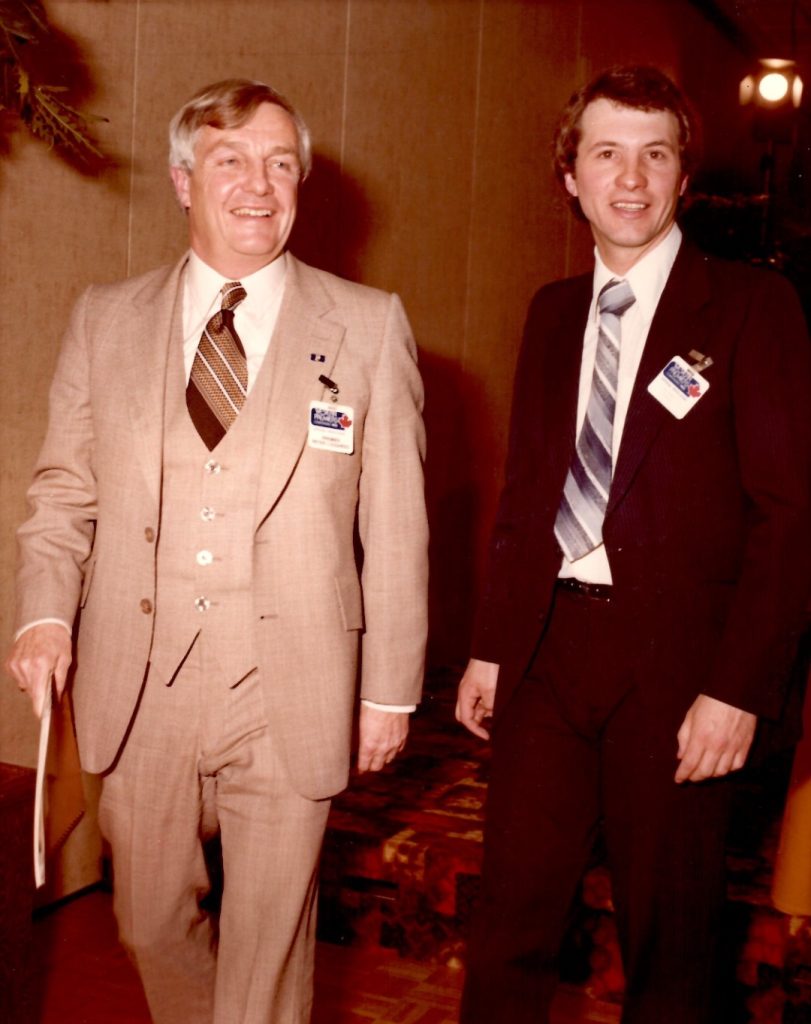
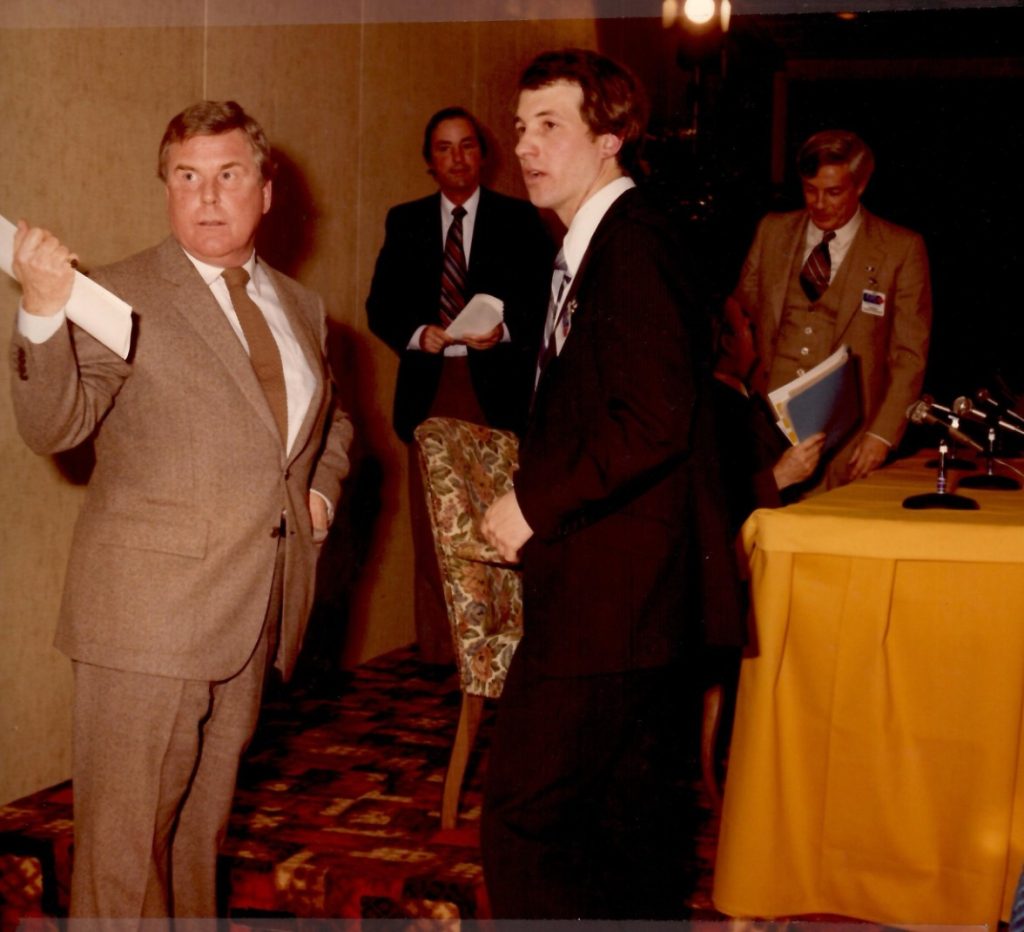
There were many trips to Ottawa in the first two years of my time as News Secretary. First Ministers’ meetings took place in the old railway station which is now home to the Senate. The old Skyline Hotel, now the Delta on Lyon Street, was home for weeks at a time.
Lougheed insisted on staying at the Skyline even though the much more luxurious Chateau Laurier was across the street from the Conference center.
National Energy Progam (NEP)
I had barely been handed the keys to my office when the federal intrusion into provincial affairs occurred. In October 1980 Trudeau introduced the NEP, which meant, among other measures, that the federal government would control the price at which Alberta oil was to be sold to the rest of Canada. The price set would be substantially lower than what the province would receive on world markets. Within days Lougheed announced the province would reduce its supply to the rest of Canada by 15%. This initiative became known as “turning off the taps.”
Alberta and Ottawa eventually reached an agreement in September 1981 that would see the federal government substantially gut the NEP. This agreement did not come about without many long days and nights of negotiation. I spent almost 2 weeks closeted in the Montreal Four Seasons Hotel handling media relations for Energy Minister Merv Leitch who was negotiating with federal minister Marc Lalonde.
On April 17, 1982, the Canadian Constitution Act was proclaimed into law by Queen Elizabeth. The act contained Trudeau’s cherished Charter of Rights and Freedoms but also, at the insistence of Lougheed, an amending formula which gave smaller provinces more authority and the adoption of the notwithstanding clause which allows provincial legislatures to override court decisions.
After the 1979 election when Lougheed won 74 of 79 seats in the legislature, virtually unchanged from the 1975 results, the publisher of the Edmonton Journal publicly declared it was now the job of the media to be the official opposition. This declaration didn’t make my job any easier when I joined the Premier’s office some six months later.
As I settled into my role it became obvious that certain reporters and editorialists were taking it to heart. I never passed on an opportunity to let the media know that they were wrong.
Click here to see media coverage and responses
There were so many high points working for Peter Lougheed but probably the most memorable was the provincial election on November 2nd, 1982. For 28 days it was mostly the Premier and I on the King Air heading to another small Alberta town for a campaign stop. This was now Lougheed’s third election as the leader of government. He had been Premier for 11 years and some cracks in the PC amour were starting to show. The Alberta separation movement, spawned by the National Energy Program, was a real threat as Gordon Kessler of the Western Canada Concept party won a February by-election.
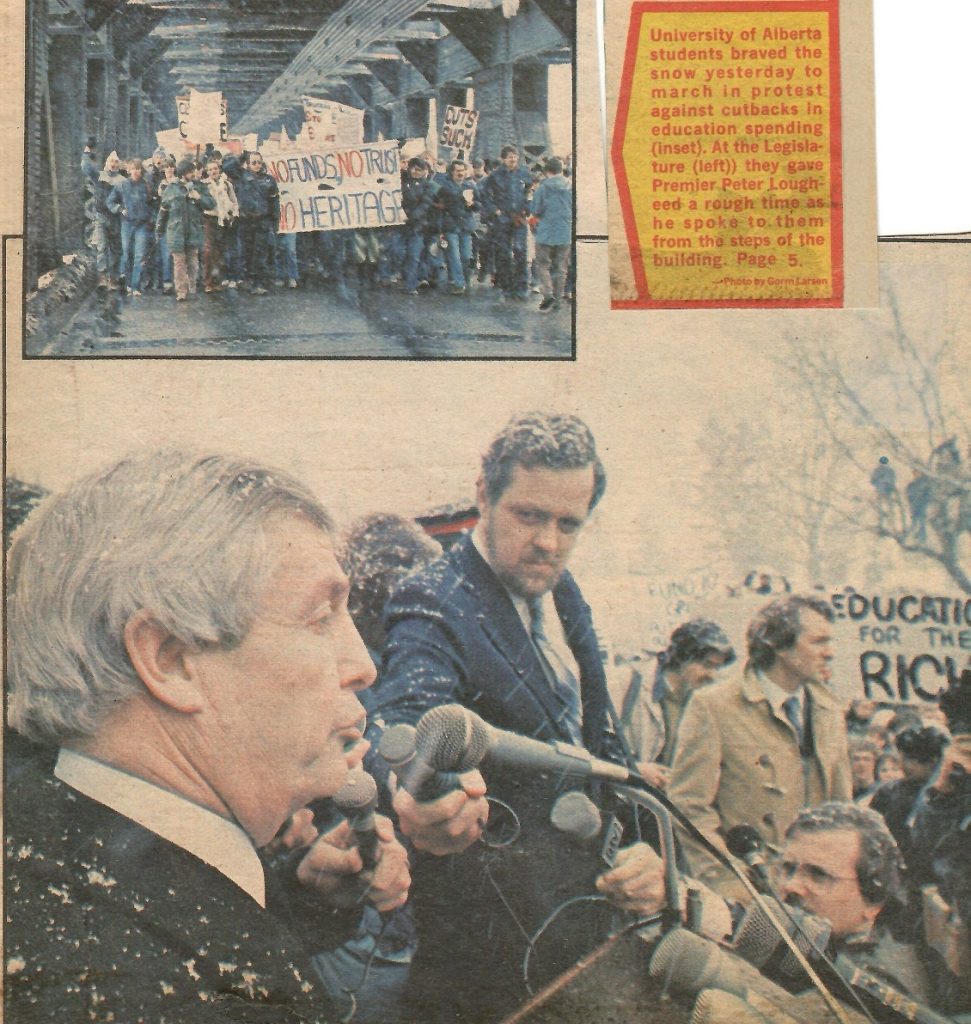
Interest rates had skyrocketed to over 20% and Albertans were unable to renew mortgages and were losing their homes. As the campaign was about to be launched Lougheed announced that mortgage rates would be significantly subsidized by the provincial government. When it was all over Lougheed’s PC’s won 75 of the 79 seats, 62% of the vote with a 66% turnout at the polls.
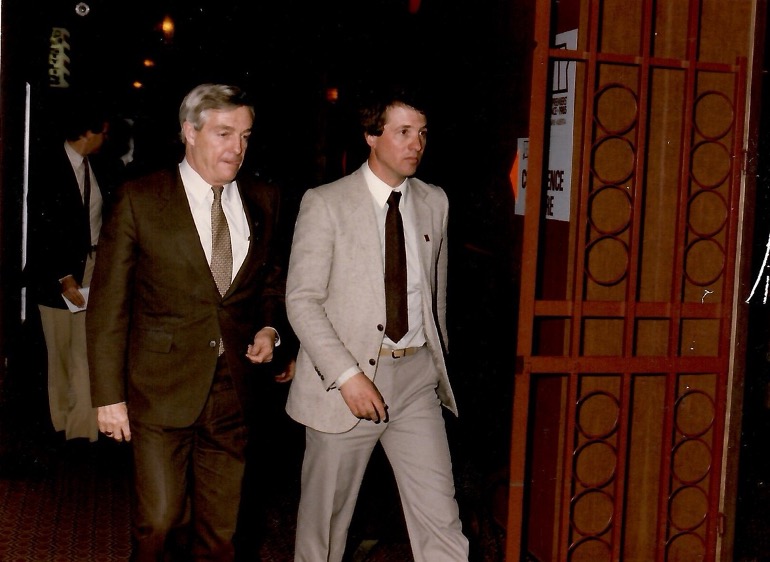
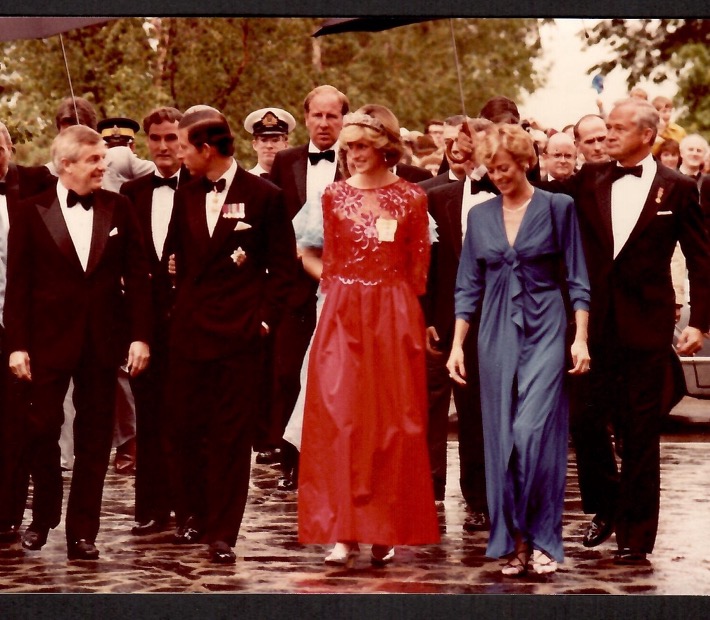
As one might expect, attending receptions and meeting prominent people was part of the job. The one that will always stand out was with Prince Charles (now King Charles) and Lady Dianna. I had met the prince a few years earlier as a reporter covering his visit to Alberta but this time, he was married to the extremely popular Princess Dianna.
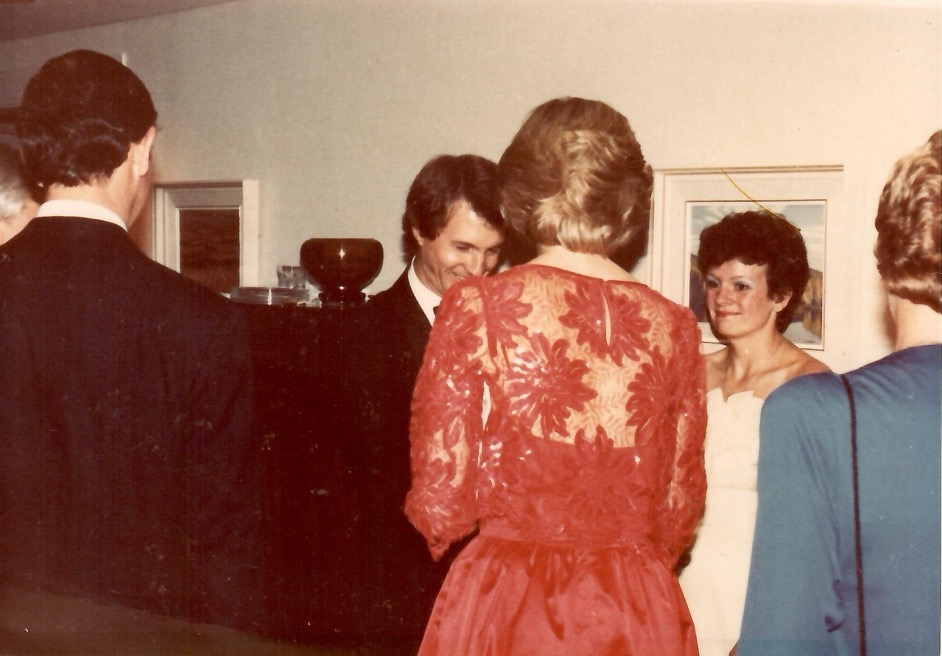
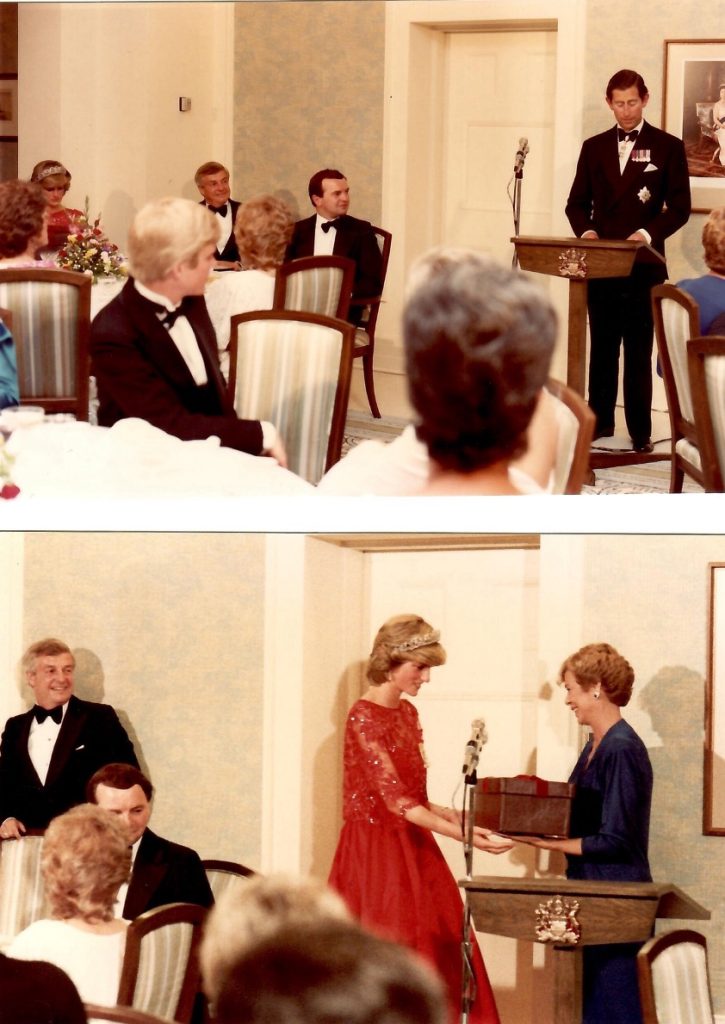
My rural roots and time with CFCW meant that weekly newspapers were always considered a vital part of communication with citizens. Lougheed would always attend the annual convention and typically make an announcement pertaining to rural Alberta.
While most of my experiences working with the Premier were positive, there were a few occasions when issues arose that made me wish I had become a sausage salesman.
The first occurred when Bob Giffin said he had an unusual request. He wanted me to fly to Honolulu to take several packages of briefing materials for the Premier. Lougheed had been on a lengthy trade mission to Asia and was stopping for a few days in Hawaii before returning to Canada. Within hours of arriving home, the Premier was scheduled to fly to Ottawa for a First Ministers conference and always made sure he was well briefed. This 2-day trip seems quite unusual today, however 45 years ago there was no internet.
Shortly after joining the Premier’s office, the Edmonton Journal ran an investigative report regarding children in care of the Alberta government. As punishment for misbehaving, children were forced to eat dog food, laced with tabasco sauce. The Premier knew how sensitive this issue would become and his minister Bob Bogle wasn’t the best communicator in cabinet. I was asked to work with the minister to get the issue resolved. The private home care operator was dismissed, and damage control was about the best that could be done with this unfortunate situation.
On the morning of November 15, 1983, on arrival at the office, I was greeted with the news that Solicitor General Graham Harle (the province’s chief law enforcer) had been caught the previous evening with a prostitute in his government vehicle. Mr. Harle tried to wiggle out of the embarrassment by claiming he was doing research for his portfolio. There was no amount of media advice that could fix this situation. My primary role was to ensure the Premier did not get drawn into commenting as one can only imagine what his reaction was. The issue got resolved within hours as Harle resigned his cabinet position.
The darkest moment however occurred Friday, October 19, 1984, when a plane crash in northern Alberta claimed the life of NDP leader Grant Notley and five other people. Lougheed’s minister of Housing and Utilities, Larry Shaben, was also on the plane and survived.
Notley ran for office in Edmonton on 3 occasions before finally moving to the riding of Spirit River/Fairview, north of Grande Prairie and was elected in 1971. Shaben lived in High Prairie, and both were returning home at the end of the weekly legislative session.
Lougheed and I were in the office very early that Saturday morning. Obviously, the media wanted the Premier to comment on Notley’s passing. Setting politics aside, the Premier was not a fan of Notley, but his comments needed to reflect the grief of his death while at the same time expressing happiness that one of his cabinet ministers had survived.
After careful consideration of his words, Lougheed handled the situation with the grace and professionalism that Albertans had become accustomed to.
Lougheed knew that keeping caucus members engaged and feeling they were being heard was crucial to maintaining their loyalty. Too many leaders never figure that out and are brought down by their own team. After 14 years as Premier his government caucus was as loyal as the first group elected in 1971.
One guy who didn’t figure that out was Tom Sindlinger. Elected in Calgary Buffalo in 1979 he publicly disagreed with Lougheed over the constitution and was booted from caucus by the Premier. He was hailed as a hero in the media but lost the next election running as an independent. I knocked on his door many years later when running for election as a Member of Parliament. We had a good conversation and am quite certain I got his vote.
Having thick skin was paramount for this role.
Click here for some random media articles.
Time to move on
As the calendar turned to 1985, the constitution had now been repatriated with Alberta’s amending formula, and a new energy agreement was in place. Brian Mulroney and the Conservatives had been elected federally, and the threat of federal intrusion had gone away.
Lougheed “kicked the feds off the front porch” as he promised Albertans he would do and few serious challenges were in sight. It was now time to plan for life after politics. This man did nothing without a long-range plan and leaving office after a decade and a half was going to be no different.
Sensing where things stood as the snow was melting and the grass turning green, I also needed to start planning for life after politics. If Lougheed were to announce he was leaving, my job would likely end as well.
Working in an international office selling Alberta, its people and resources was intriguing. Alberta had 3 offices in the United States, New York, Houston and Los Angeles. Having a young family meant New York wasn’t desirable and Houston was too energy focused. Los Angeles was a destination that seemed right.
Hugh Planche was the Minister of Economic Development and we got along well. We were both kind of “tell it like it is” guys. Most importantly he was also responsible for Alberta’s international offices.
I discussed the California opportunity with Minister Planche and as luck would have it the representative in LA was a department civil servant due to return to Alberta. The Minister was looking for someone to replace him who had a public relations background, preferably with political experience. He said the job was mine when I wanted it.
If the Premier resigned, I would have what seemed like another dream job to go to. This would be important because the day after leaving the office, the phone would stop ringing and withdrawal would set in. Having the security of the L.A. office was an incredible relief.
This agreement remained private, as even Lougheed was unaware until after his announcement.
Lougheed had everything thoroughly planned out and on June 25th, 1985, announced that he would be resigning effective November 1st, 1985, and the party should immediately start the process of finding a successor.
Unlike so many leaders, who are forced to resign after immense pressure, this news conference was a joyous occasion followed by a staff luncheon at the Royal Glenora club. Pictures tell the story of the respect everyone had for Premier Peter Lougheed.
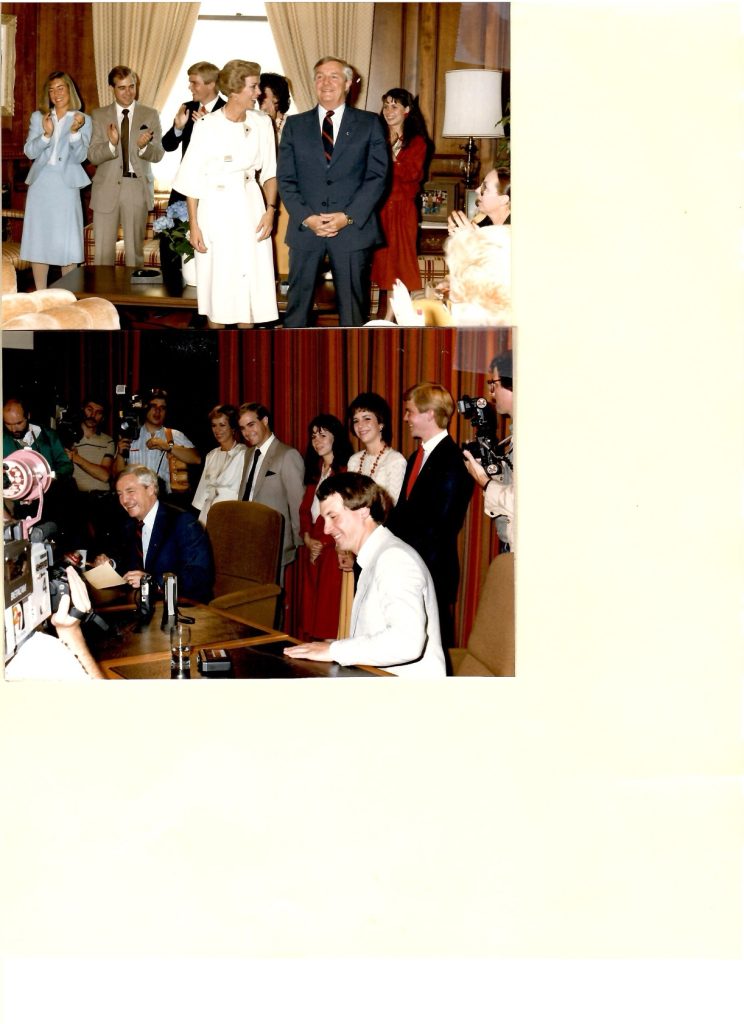
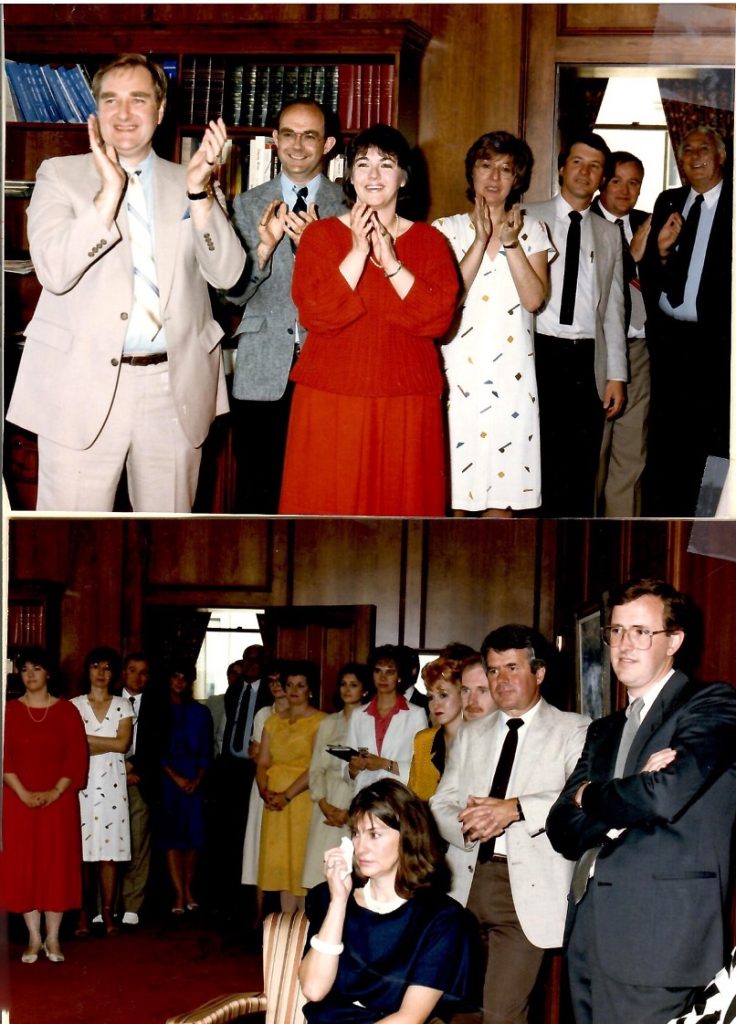
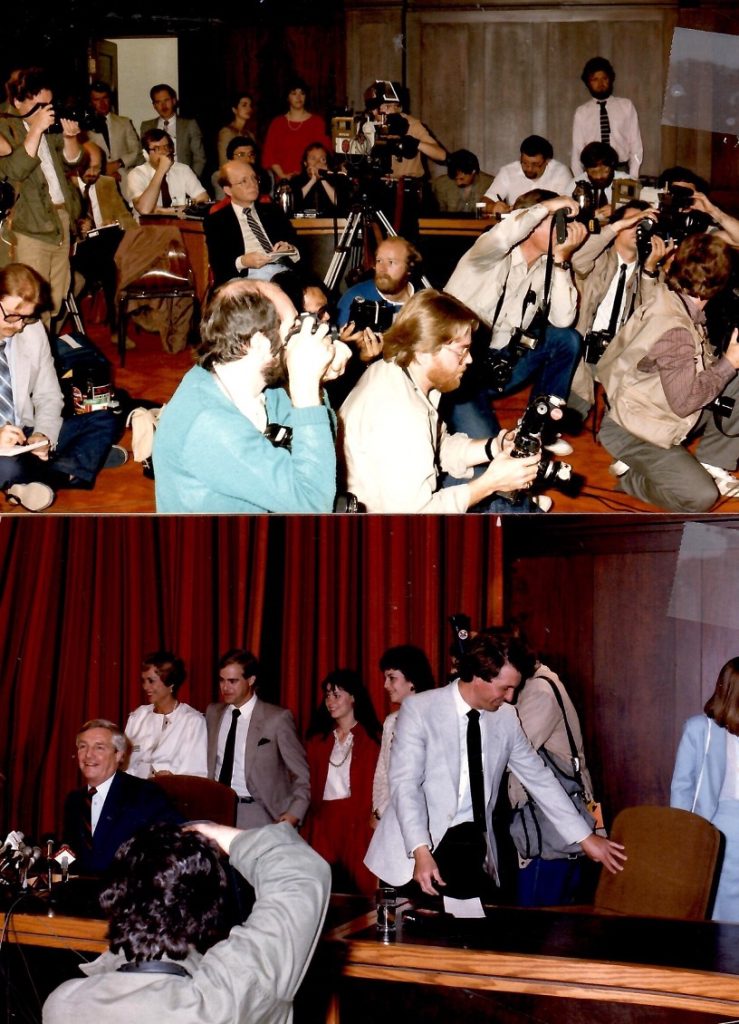
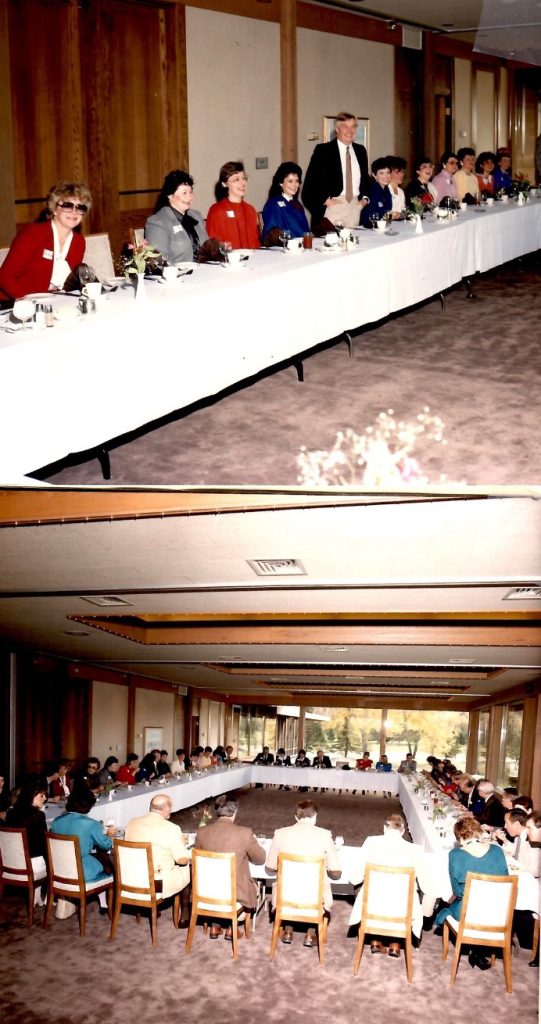
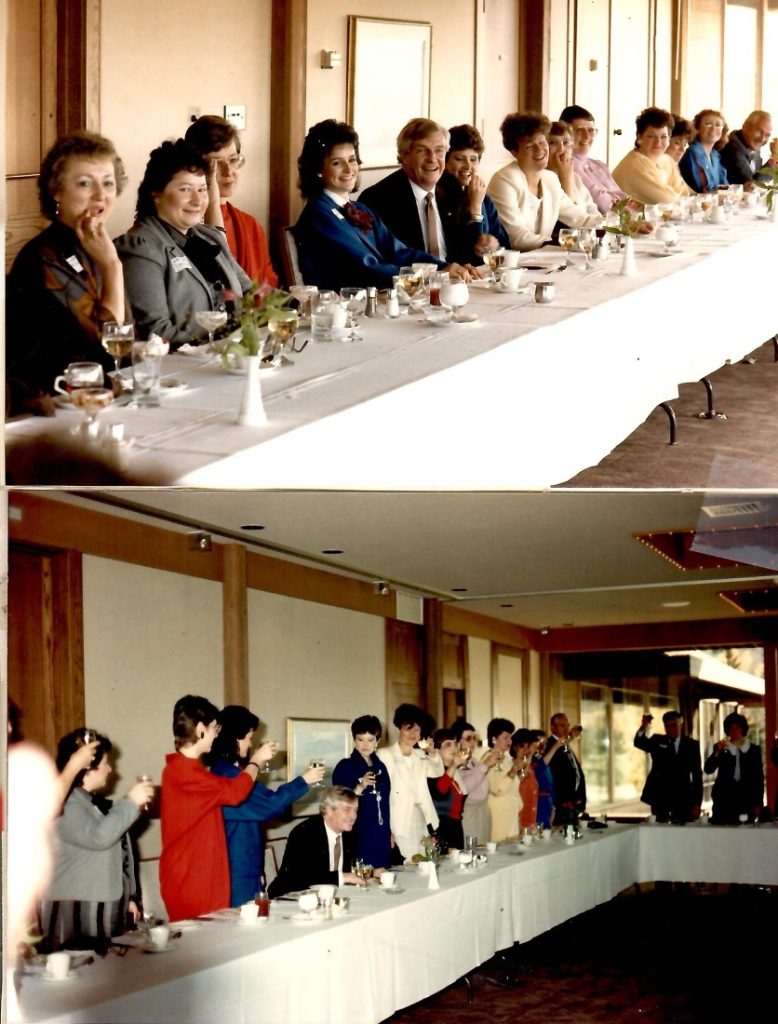
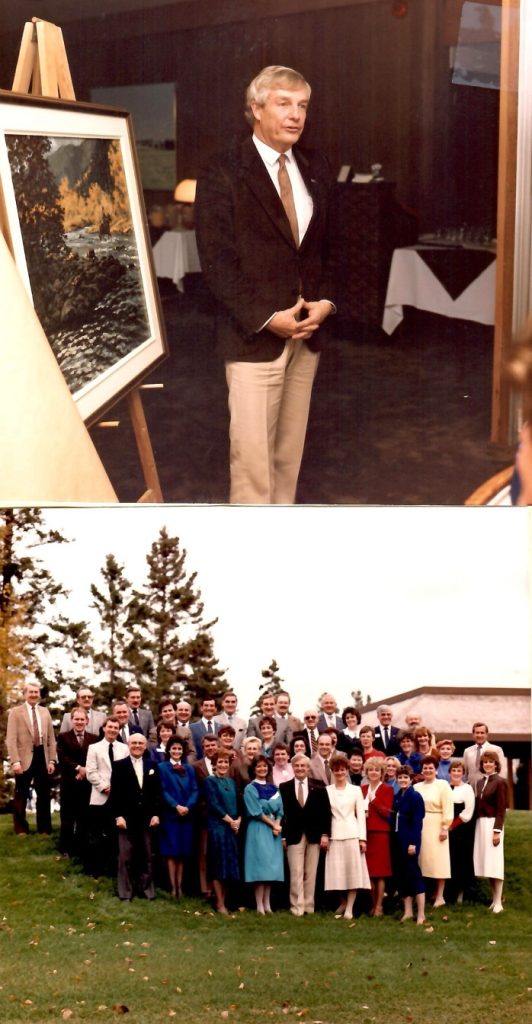
My final day coincided with Lougheed’s departure November 1, 1985.
6) Softball
Sports was my passion as far back as I can remember. This included using a small allowance to buy sports magazines on our weekly trips to the big city, freezing the snow-covered ground to build a backyard skating rink or riding my bicycle to my uncles on Saturday to watch baseball.
As years went by it also seemed that I was doing a lot of the organizing. Whether it was a football game for the neighbourhood farm kids or softball in the summer. My father had no interest in sports and did not drive me to organized activities like most of the other kids. Whether it was hockey in the winter or baseball in the summer I was too far behind to be competitive when turning 16 and could drive.
In grade 10 a friend and I organized a men’s softball team to compete in local weekend competitions. This continued each summer until 1970 when I didn’t return to farm in the spring.
My first summer in Calgary was on a team in the city league. The following season Burns, my employer, sponsored an Intermediate A team that was very competitive travelling most weekends across Western Canada.
In 1972 the Burns team competed in a tournament in Three Hills, and we spent the weekend (or so we thought) in our tent trailer at a campground just east of Highway 2. Kylee was only a few months old, and Linda’s parents were with us.
After winning our games on Saturday we headed back to the campground late in the afternoon, fired up the BBQ and started to prepare dinner. Within about 30 minutes a tornado hit, completely wrecking our tent trailer and many others in the campground.
I started work August 1st in Moose Jaw, so my softball season was done and did not play in the summer of 1973 in Camrose as we were building our house.
In 1974 I formed a team in Camrose, competing in a local central Alberta league. Peter Doerksen of Battle River Dodge was a generous sponsor, but we didn’t do well and the team folded when we moved to Edmonton the following year.
When we moved to Sherwood Park I played for one year on a city league team and then joined Salisbury in 1976 and went to provincial finals in Medicine Hat. Unfortunately, we lost in the final game to Grande Prairie and the team folded after the season.
In 1977 I joined the Fultonvale team and made many good friends over the years. We had a very competitive team, participating in tournaments across northern and central Alberta and won the provincial senior B championship in 1980.
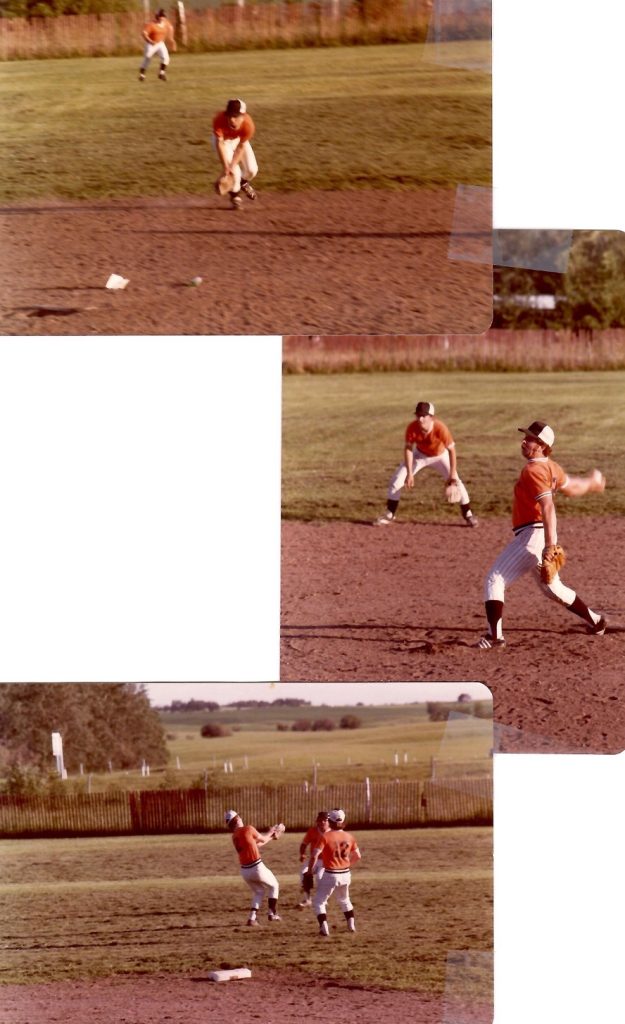
Click link here for more Fultonvale pictures and other fastball stories
In my time with the various men’s fastpitch teams, money was always an issue. Events such as dinner/dance, bake sales and other community initiatives took a lot of work and would only raise a few hundred dollars. Attaining sponsorship was a challenge for rural communities and players were always asked to fork over several hundred dollars each to keep the team afloat. This also hampered recruitment of good players.
The main source of revenue was from winning tournaments. The key word here though is winning. There was an entry fee and if the team didn’t end up with prize money it would cost to participate.
Shortly after joining Fultonvale, I organized our own tournament for the last weekend in May. Although we had just one diamond and could only accommodate 8 teams, it was a success. We made approximately one thousand dollars and held the tournament each year going forward but it was weather dependent and on a couple of occasions had to be cancelled and had no revenue.
We always received very good media coverage in the Sherwood Park News.

With no sponsorship and money continuing to be an issue for the team, I organized a Sportsmen’s dinner to be held in early 1981. This concept was way above the imagination of my rural teammates. As a result, I had little help, especially selling tickets which were priced at a modest $25.
In February 1981, our first event had baseball stars Gary Carter and Terry Puhl, and Edmonton Eskimos linebacker Dan Kepley as the headliners. While most people came to see and hear the players speak, the entertainment value came from noted after dinner speakers Vancouver sports columnist Jim Taylor, Max Gibb, Ray Kingsmith, Provincial cabinet Minister Al Adair, former Minister of Sport Iona Campagnola and Master of Ceremonies Bob Arnold, the morning man at CJCA.
Unfortunately, the Edmonton Oilers were playing out of town on the day the event was held. This was one of the lessons learned, don’t schedule an event without first determining who is available to attend. We managed to sell about 200 tickets and basically broke even financially.
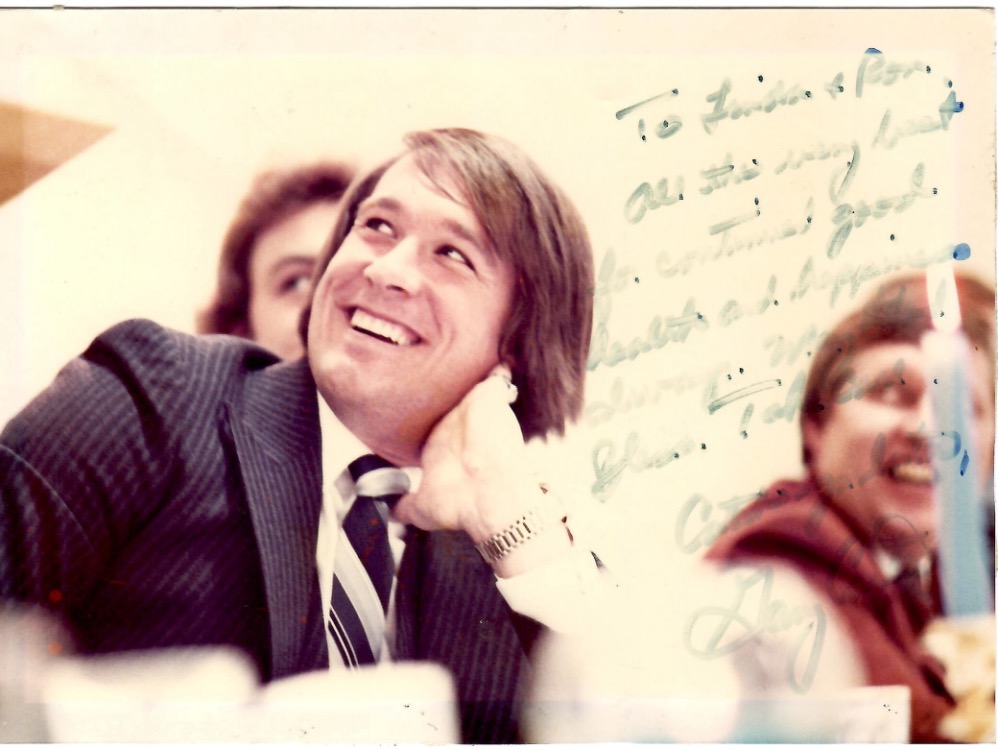
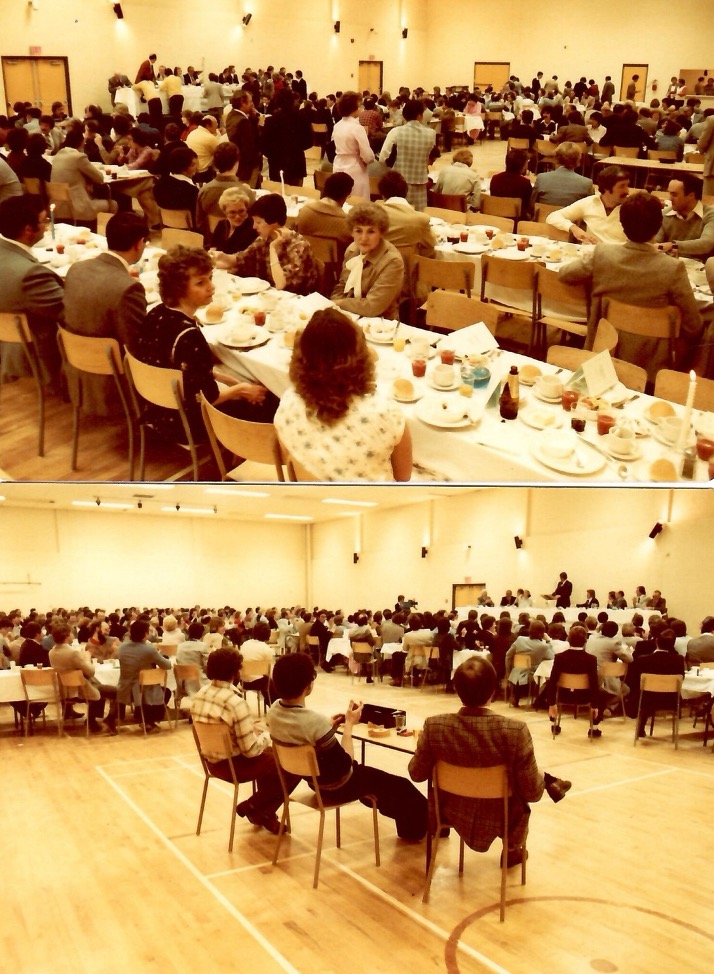
Click link here for more pictures and stories of first Sportsman dinner
If we were going to hold the dinner again, a hockey headliner was required to sell tickets. Bill Tuele, who I worked with at CFCW, was now the Public Relations Director for the Edmonton Oilers. In 1979 Wayne Gretzky joined the team as an 18-year-old phenom in the World Hockey Association (WHA). The Oilers were now in the NHL and Gretzky had become the top player in the league.
Tuele convinced Gretzky to attend our dinner as the headline speaker for a fee of one thousand dollars. The event, with over 500 guests, was sold out within days, and meant a very sizeable profit at $25 per ticket.
Gretzky clearly sold the tickets, but other guests included Pitcher Bill Gullickson of the Montreal Expos, Dave Cutler from the Edmonton Eskimos, trapshooter Susan Nattrass, former NHL coach Rudy Pilous and popular CHED morning man Wes Montgomery as Master of Ceremonies.
A very valuable lesson was learned that would serve me well later in life. I was a baseball fan and assumed baseball stars would sell tickets. Edmonton and area residents were hockey fans. When organizing an event, know your target audience.
Click link here for more pictures and stories of the second Sportsman dinner
Two more dinners were held in 1983 and 1984 and by then the event had run its course. Headliners in those two years were baseball players Al Oliver from the Expos and Ernie Whitt from the Blue Jays, Waddell Smith from the Edmonton Eskimos, Kevin Lowe and Glenn Anderson from the Oilers.
Click link here for more pictures and stories of the third Sportsman dinner
Click link here for more pictures and stories of the fourth Sportsman dinner
The proceeds from these dinners made the Fultonvale club financially secure and raised enough money to sponsor a junior team.
By 1983 my playing career was over, and it was time to try coaching. A three-year plan was devised, forming a junior fastball team with the intent of hosting the Canadian championships in Edmonton in 1985. A committee was formed, some involved in softball and others who were just good organizers, to bid for the championships in August 1985. Our bid was successful and now it was time to build a team over a three-year period to not only host the Canadian championship in three years but win it.
Our Strathcona junior team in that first year was competitive but wasn’t given much of a chance in the provincial championships. We ended up losing to a much more experienced Crownwell Oilfield sponsored team from Edmonton in the final but advanced much further than expected, largely on the pitching strength of Byron Weaver from Wetaskiwin.
Click link here for pictures and stories on the Strathcona junior team
In 1984 the Crownwell team lost many of its top players and our young team merged with what remained from the previous provincial champs. Strathcona did not have a sponsor, and Weaver had graduated, so amalgamation made sense. I was the assistant coach, and George Brown ran the team. We handily won the provincial crown, and it was off to St. Catherines Ontario for the Canadian championship.
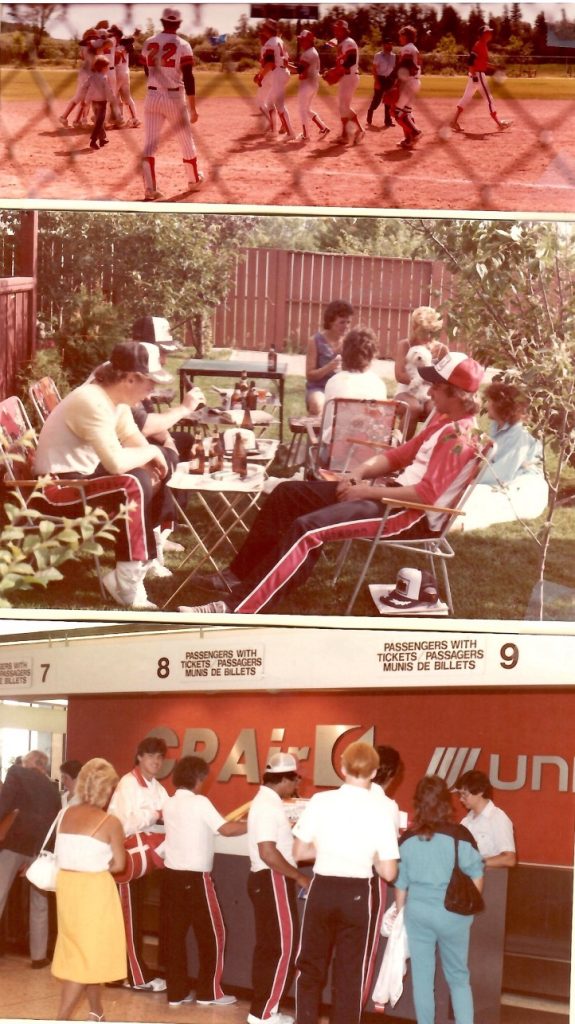
In 1985 most of the original players from the past two provincial champions had graduated. Crownwell Oilfield agreed to continue the sponsorship for the host team, but Brown didn’t stick around. The remaining players were merged for the championship tournament with another team from Calihoo. Our pitcher on that team was future NHL player and coach Craig Berube.
Unfortunately, the host team did not perform well but the tournament was a tremendous success. My coaching career was only 3 years but the experience handling young players with all levels of ego was excellent training for other endeavors pursued later in life.
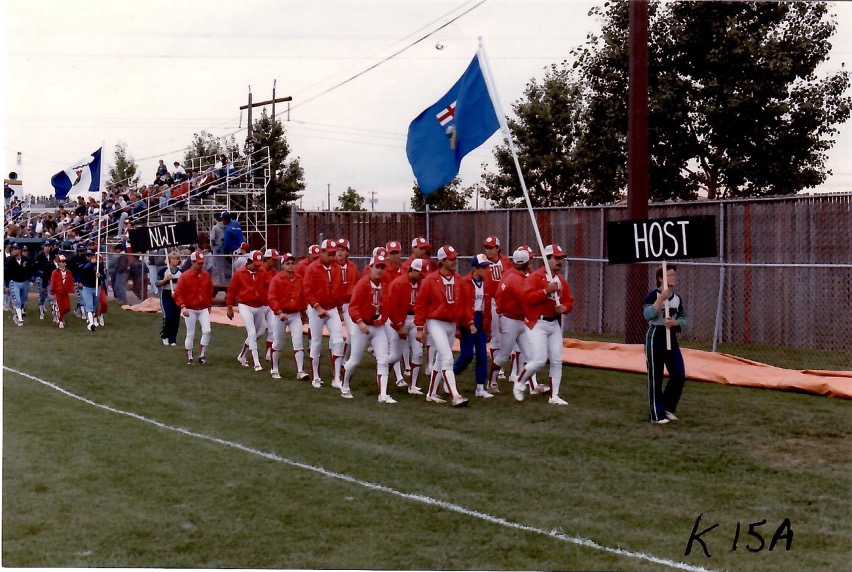
The championships coincided with the Premier’s retirement announcement and that put an end to my softball/fastpitch career. The following year our family moved to Los Angeles.
7) Off to LA, almost
While my last day in the Premier’s office was October 30th, it was determined that re-location to Los Angeles wouldn’t happen until July 1986 and in the interim, I would work in the Economic Development and Trade offices in Edmonton for six months. This would allow students of both families to complete their school years before enrolling in new surroundings in the fall.
I took the month of November off to decompress and maybe do a little outdoor activity however it was so cold all I could do was flood the rink in the backyard.
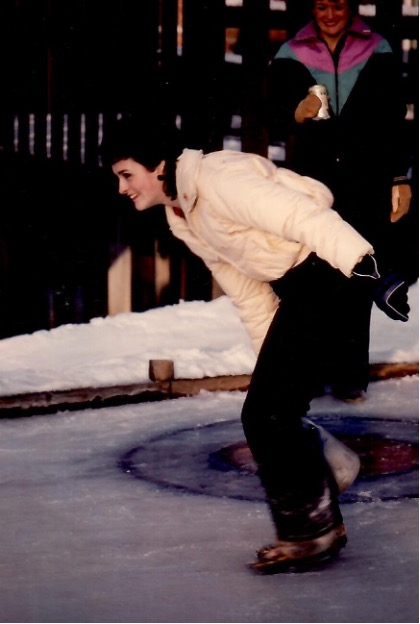
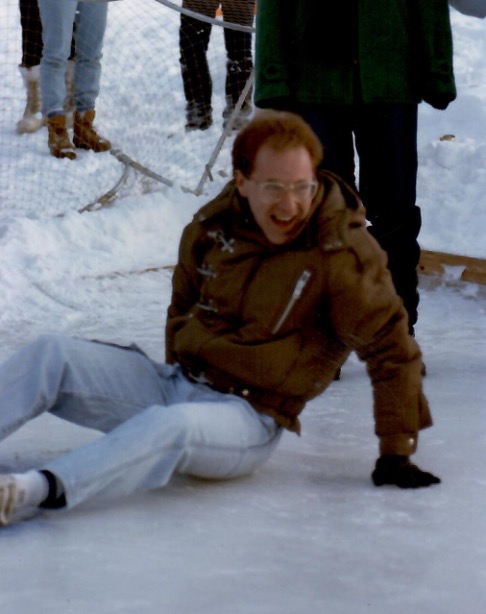
Our Antler Lake property was about half an acre with a sloped hill down into the trees that eventually led to the lake. At the top of the hill adjacent to our house was a garden in the summer and a decent sized skating rink in the winter. The rink also had curling rings at either end. Javex jugs filled with sand served as rocks and made for good outdoor fun with friends.
For those who were a little braver there was the miniature bobsled track. Watering the edges of the slide made for some interesting rides on the sled, complete with runners and a steering wheel. Less skilled drivers not paying attention, like John Kristensen, usually crashed into a pile of snow at the bottom of the hill.
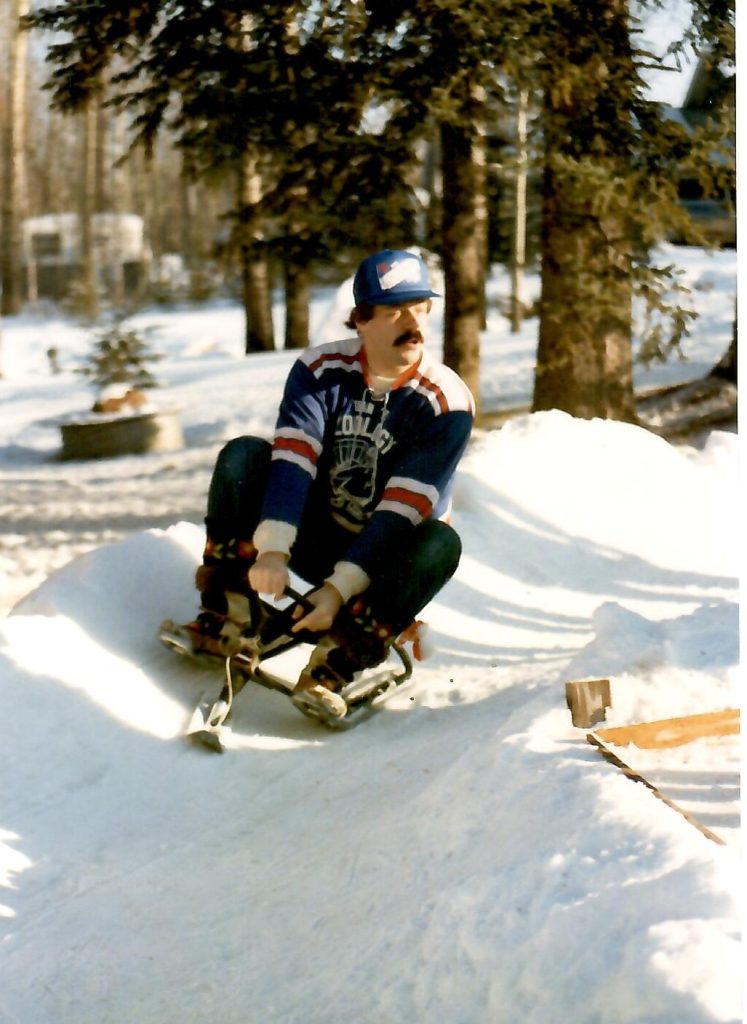
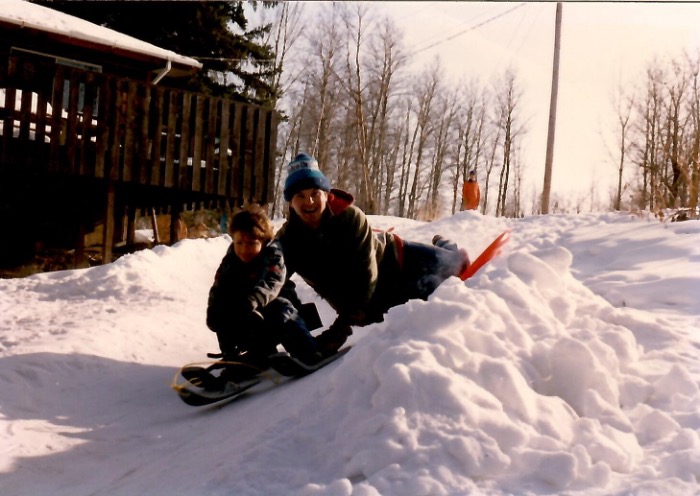
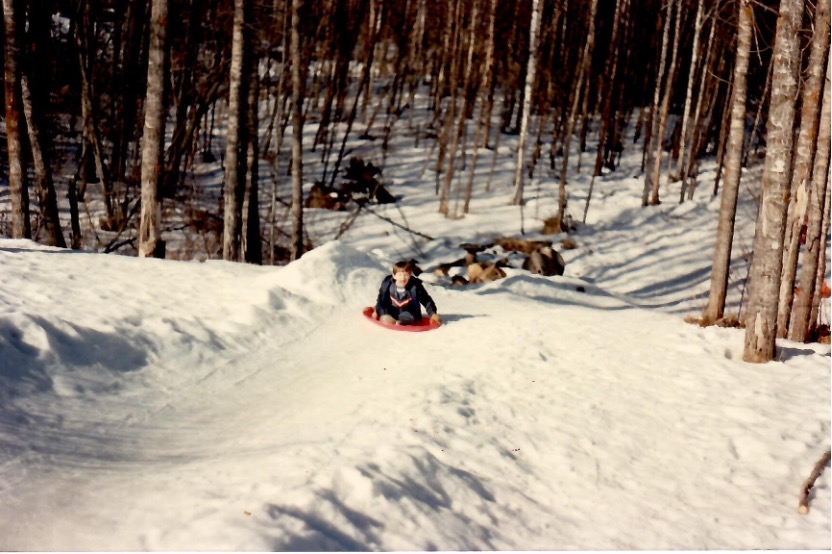
Spending time in the bureaucracy, after close to 10 years in the news media and five and half as Press Secretary, was an eye opener. Let’s just say it only took a few days to figure out this could never be long term.
Living at Antler Lake for 10 years and then taking up residence just off Beverly Glen Drive was quite an experience. Senior government officials insisted that we found living accommodation in an area of Los Angeles that had good schools and was safe.
We found a wonderful home to rent in the hills just below Mulholland Drive. We paid the portion of rent that was set out in government regulations for out of country employees with the remainder subsidized.
The Alberta government offices were on the 35th floor of the Wells Fargo building in downtown Los Angeles across the street from the Canadian consulate. Ontario, Quebec and B.C. also had offices in LA.
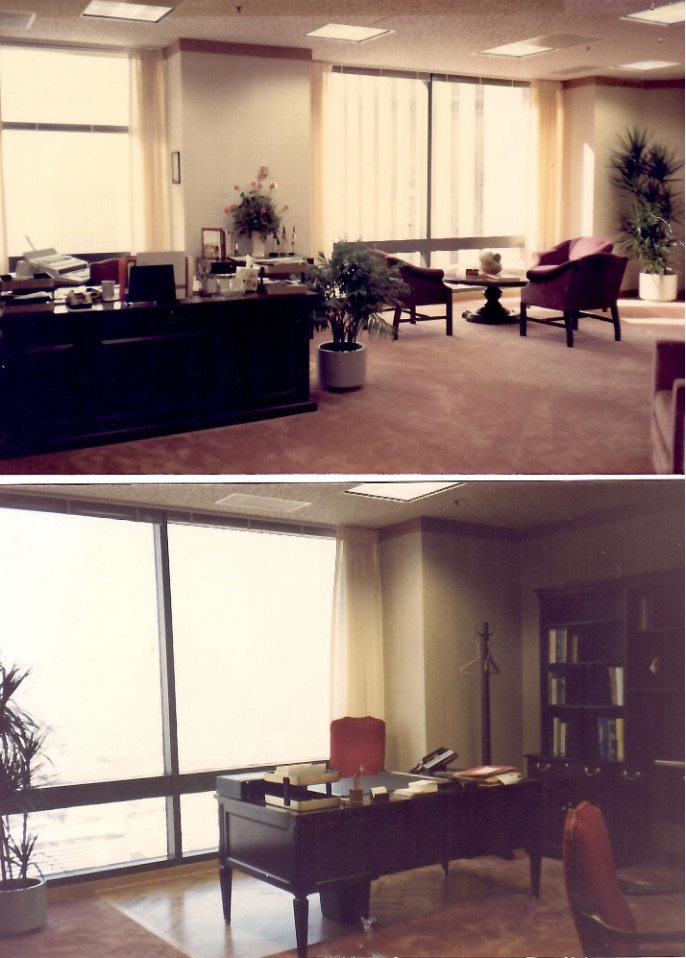
It was imperative that a one-person operation have a close working relationship with the Canadian consulate. It only took a couple of meetings with consulate officials to confirm my suspicions that most had never ventured further west in Canada than Sault St. Marie and Thunder Bay was considered by most federal bureaucrats to be in the far west of the country. I was fortunate however to have Malcolm McKecknie at the consulate and Susan MacDonald with Ontario who were very professional in their roles and helped me a lot.
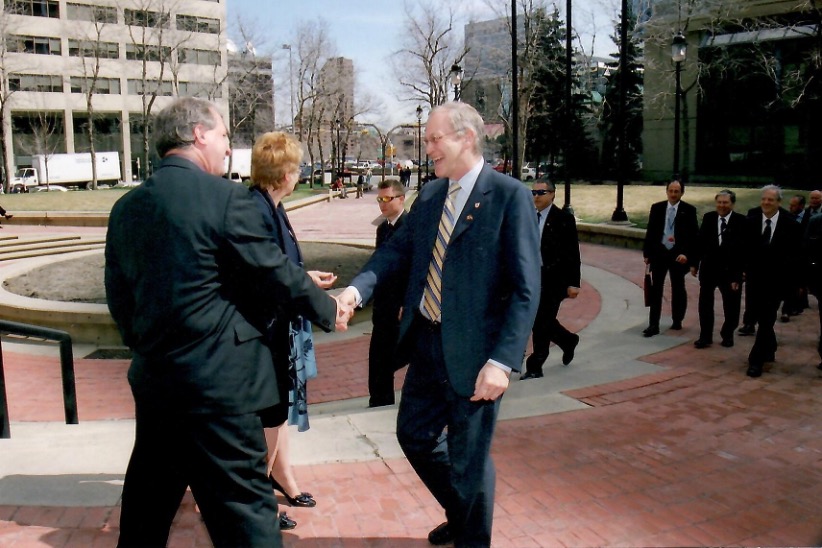
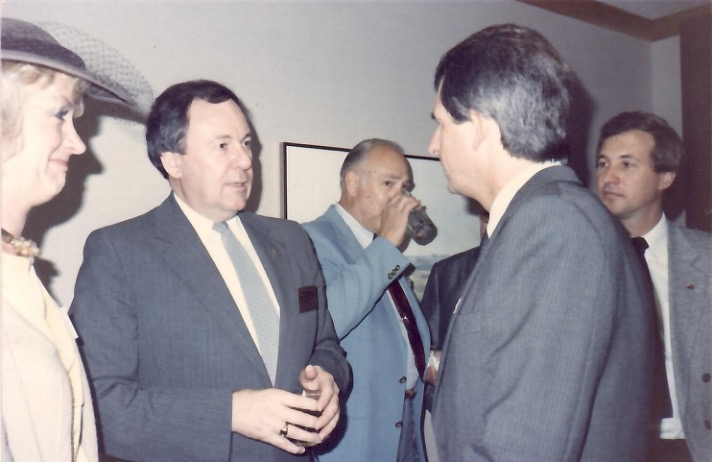
In LA there were about 2 dozen staff and almost as many in San Francisco, which was also part of my territory. The purpose of the foreign offices was to assist potential Alberta exporters in the California and Arizona markets as well as seeking out investment. As one might imagine getting attention for Alberta, let alone Canada, in such a large market was challenging however the state alone had the fifth largest economy in the world.
Within a year of moving to LA, Gordon Coombs was appointed by the Department of Tourism to promote Alberta. His job was much easier selling the Calgary Stampede, Banff and Jasper as destinations for Californians. Calgary was also preparing to host the 1988 Winter Olympics and a major focus for visitors was southern and western U.S. states. There were potential business opportunities to “piggy back” on his work.
Since so few people knew Alberta had an office in California it was determined that holding an open house, inviting business and community leaders couldn’t hurt. Minister Jim Horsman travelled south for the event as did Alberta’s U.S. Director Jim Seymour from New York.
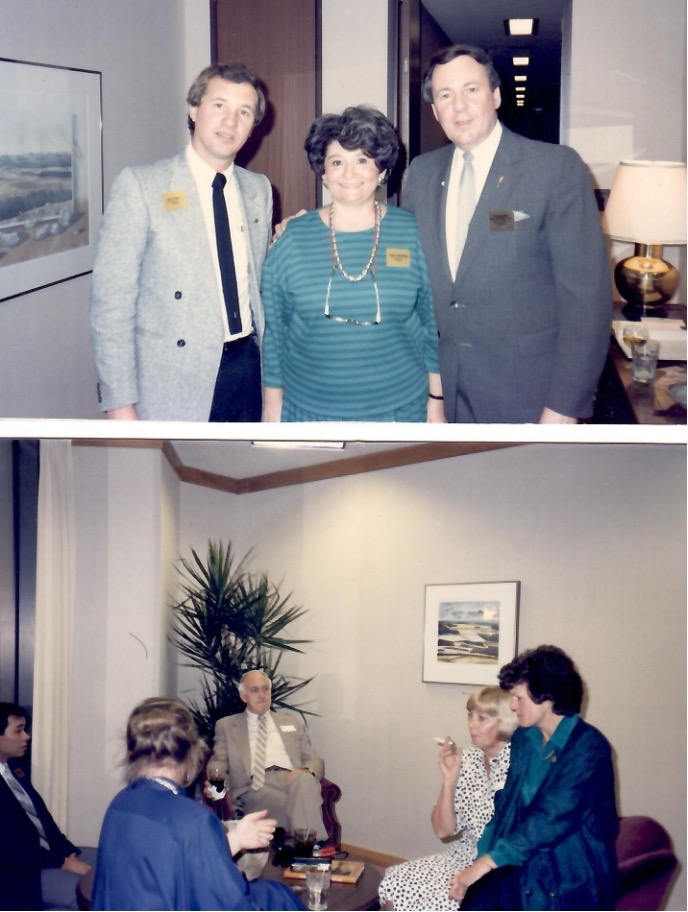
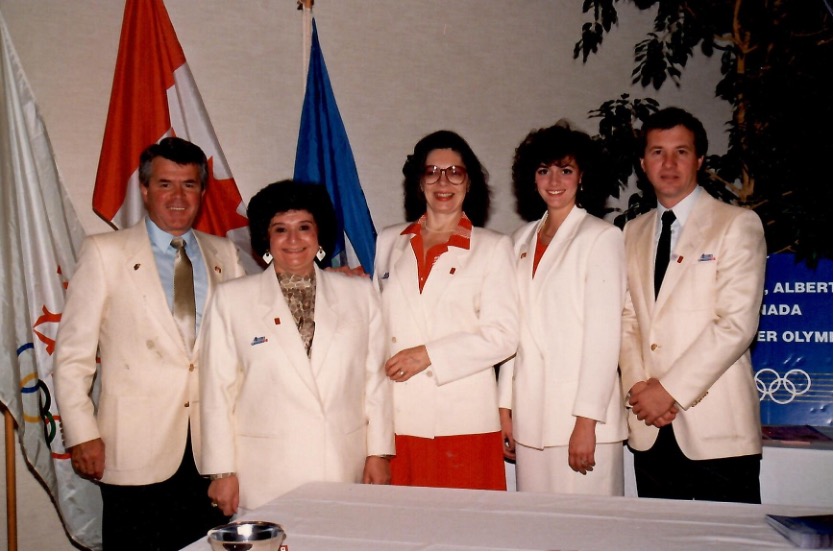
Measuring success in such a role was next to impossible, however I quickly determined the best use of my time would be to access federal tax dollars to benefit Alberta businesses. Four or five times per year the consulate would purchase trade show booth space, and I would ensure several spots were reserved for Alberta companies who I would then recruit. Many years later individuals who travelled to these trade shows and made contacts that led to future contracts would send me a note.
Our office also facilitated several missions to San Francisco, Phoenix and Los Angeles for Alberta beef producers and packers. Canadian producers, working with U.S. brokers, became frustrated at not being able to crack these huge markets. The Alberta Department of Agriculture organized, in conjunction with our office, six trade missions dealing directly with the purchasing managers of the retail outlets. Cryovac packaged products were on full display and allowed the buyers to touch, feel and observe Alberta beef. Alberta steak was then served for lunch or dinner so they could taste the finished product. Soon after these trade missions, truckloads of Alberta beef started making their way to Arizona and southern California grocery stores. Alberta beef continues to be sold today and can be directly attributed to the efforts made in the 1980’s.
Los Angeles is best known for Hollywood, but movie producers were struggling with regulatory issues and increasing costs for production in southern California. Other states and provinces were increasingly becoming attractive for movie production. Alberta was having success for the shooting of westerns or those films requiring mountains. The Alberta film community travelled frequently to California to meet with movie producers.
Joan Winser was the Canadian Consul-General at the time and was a delight to work with. She loved to have a good party and hosted several events at her residence for Canadian film producers when they travelled to LA. Alberta was always invited and several of these events were tied to the Academy awards. It presented the opportunity to meet people such as Clint Eastwood, John Candy, Martin Short and many other celebrities. Wayne Gretzky had also just been traded to the Los Angeles Kings, and the Consul General took advantage of his popularity to host events for Canadian film producers.
The free trade talks were also part of the late eighties and Prime Minister Brian Mulroney made a visit to southern California.
Click here for more stories, pictures and interesting highlights of living in LA
In the summer of 1990, it was time to seriously think about my future. We had been in LA for 4 years and the role was getting boring, but the family really wanted to stay. Linda had taken a travel management course soon after arriving and was a part owner of a travel agency in the San Fernando Valley. Her knowledge of Canada and a solid grasp of business travel provided a real niche in the market. She enjoyed it and wanted to stay and build her own career.
Calgary based SMED manufacturing had developed a solid presence in the California market. Mogens Smed’s modular office furniture business was growing and the market had good potential. I had developed a friendship with the SMED representative, and he offered me an opportunity to join the sales and marketing team. In September I provided government with notice of leaving at year’s end. This allowed me to slowly ease into the business of sales and give Alberta time to find my replacement.
I was getting myself set up with SMED as the year end was approaching when a call came from the Human Resources department indicating that our son would not be eligible for medical coverage on their plan because of his pre-existing conditions. Of all the things we experienced living in the U.S. that may have been the biggest gut punch.
I had no choice but to get back to Alberta before my health coverage expired at the end of December. Cody and I drove back to Canada prior to New Year’s Day. Linda, Kylee and Boo Boo drove back several months later after wrapping up her business.
As so often happens in life, things tend to work out. Within six months I was able to reestablish myself in Alberta while the economy in California went into a severe recession. My position with SMED would have almost certainly been terminated shortly after taking the job.
8) Unemployed, broke and back in Edmonton
Cody and I arrived in Edmonton on the very last day of 1990. We rented an apartment and a friend gave me a small consulting contract to help pay the bills.
Linda and Kylee arrived back in Canada in March by which time I had negotiated a rent to own purchase of a home in North Glenora.
Shortly after arriving back in Alberta, Linda had some cash from the sale of her one third ownership of the travel agency in California and purchased a small agency, Laser Travel, in the Crestwood shopping center in west Edmonton. The agency had good potential as it bordered on Edmonton’s most affluent neighbourhood, Glenora. Linda also capitalized on our political connections and eventually did all Premier Klein’s travel.
Not having full-time work, I enrolled in the H & R Block income tax course. The intent was to gain experience and handle the tax and financial affairs for the travel agency. H & R Block provided a few evening courses in personal tax filing and then there was a requirement to work a certain number of hours before advancing to the next level of tax preparation.
I worked part time in the evening for a few years, earning a little extra cash and then other work and play got in the way.
Even with international trade experience and serving as News Secretary to former Premier Lougheed, finding employment was difficult.
My arrival back in Alberta coincided with the provincial government’s decision to privatize Alberta Government Telephones (AGT). I was hired as AGT Director of Media Relations May 1st, 1991. The Media Relations position seemed like a step backwards, however it was with a newly privatized company and there would be opportunities to grow my career.
TELUS, a holding company, was created in the process of privatization but members of the senior management were all holdovers from the crown corporation. The government retained just under 50% of the company and a “golden share” which granted veto rights over critical decisions.
Relations between the senior management team and the provincial cabinet were strained. Management was asking to have the remaining shares privatized and the golden share revoked, as the structure was negatively impacting the share price. Cabinet was resistant because it didn’t trust the leadership at TELUS.
I continued to stay involved politically and had strong ties with cabinet ministers. CEO Hal Neldner recognized my cabinet connections and added government affairs to my role, specifically to assist in getting this situation resolved. Whether my involvement had any impact remains unknown but within a few months the government passed legislation selling the remainder of the shares and in midway through 1992 revoked the golden share.
Government liaison work continued while handling media relations, and early in 1994 TELUS created a Government Relations team and I moved to the new department.
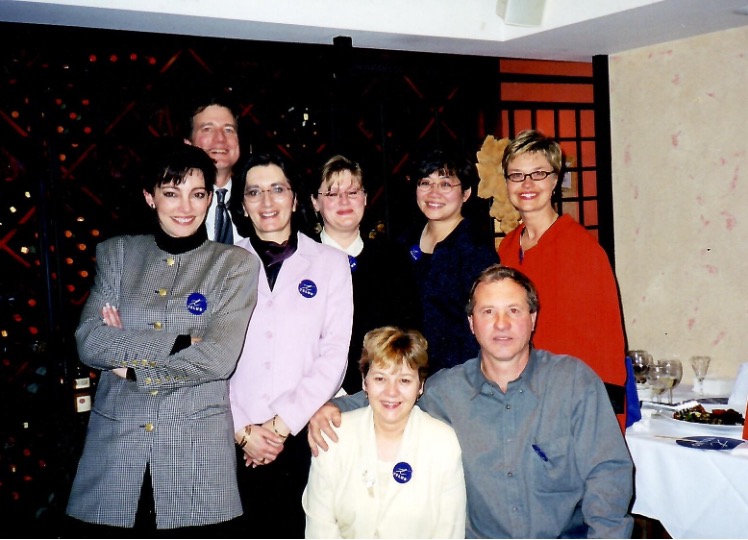
Click here for more stories and pictures of early days with AGT/Telus
Soon after arriving back in Edmonton, I joined the board of the Edmonton Glenora PC constituency, where we resided. Nancy Betkowski was the MLA, and we knew each other from our days as staffers in the legislature under Premier Lougheed. She was elected MLA in 1986 succeeding Lou Hyndman, one of the 6 Lougheed originals of 1967. Nancy was also in cabinet serving as Education Minister from 86-89 and then Minister of Health.
In the early part of 1992 an Edmonton communications consultant, Terence Harding, decided to run for a city council seat in the October 22nd municipal election. I liked him, lived in the ward and agreed to manage his campaign.
I had a decade of involvement politically at the provincial level but managing an aldermanic campaign was quite different. There was no political party to provide support, and it was all about selling the candidate. Voting would be for an individual, not a party.
Each of Edmonton’s six wards were represented by two aldermen. Harding didn’t have a lot of volunteers, so Linda and I ended up working almost every spare hour through the summer and fall on the campaign.
He worked hard and door knocked most of the summer and fall. Unfortunately, he ended up fourth, 500 votes from being elected. He did well for a candidate who was relatively unknown and my advice was to spend the next three years knocking on doors and getting better known if he planned to run again in 1995.
While the municipal elections were happening the provincial PC party was launching into a campaign to replace Premier Don Getty, who announced in July that he would be stepping down. A new leader was to be selected in December.
Don Getty was elected leader replacing Peter Lougheed in 1985. Getty and his Progressive Conservative government struggled through the late 80’s with low oil prices and deficit budgets. Several provincial investments in attracting companies to locate in Alberta did not turn out well and by 1992 the government had become quite unpopular.
The Liberals led by former Edmonton mayor Lawrence Decore were calling for deep budget cuts which was resonating strongly with Albertans. The next election was due in 6 months, and polling was indicating the Liberals were headed for a majority government.
Nine candidates entered the race to replace him as leader but two had emerged as front runners. Betkowski and former Calgary mayor Ralph Klein who had the support of more than half of the caucus. Getty had appointed Klein Environment Minister after the 1989 election and for 3 years the former mayor travelled the province building support with rural MLAs. He also had Rod Love as his main political organizer.
Betkowski had been Education and Health Minister in her two terms and quietly alienated many of the rural MLA’s. However, she remained quite popular, certainly in Edmonton and to a lesser extent in Calgary. Only 2 MLA’s Bonnie Laing and Jim Dinning, publicly supported her.
I had known Nancy personally for over a decade and was on her Glenora board. Now that Harding’s aldermanic campaign concluded I could spend more time on her leadership bid. She had a lot of well-meaning individuals on her team, but the political organization was a mess. Dinning, a few others and I ended up being more heavily involved than had been anticipated.
It was a nasty campaign. One of the other candidates stated, “We can’t win this province back – we can’t be the government – with a smoking, drinking, paving, glad handing Premier.” Betkowski was criticized for not being a team player with caucus and too closely tied to Getty.
There is a saying in politics that every vote counts. On November 28th, 1992, when the votes were tabulated Betkowski had a one vote lead over Klein, 16,393 to 16,392. Had this been the final vote Betkowski would have become Premier winning by one vote; however, it was only 31% of the total votes cast and a winner would not be declared until one candidate had 50% of the total. A second vote was set for a week later.
The other 7 candidates threw their support to Betkowski and victory seemed inevitable. However, led by Ken Kowalski the rural MLAs went to work. Memberships were on sale up until voting closed a week later.
The second vote wasn’t close. Klein tripled the number of votes winning 59% and becoming the 12th Premier in Alberta’s history. He went on to serve in that capacity for 14 years – 52 days shy of Peter Lougheed’s time as Premier.
The relationship between Betkowski, her supporters and the leadership team around the new Premier became very acrimonious. Betkowski had no interest in being part of “Ralph’s Team” and announced early in the year that she would not run again in Edmonton Glenora in the spring election of 1993.
I was now the primary government liaison for TELUS and concerned how my involvement with Betkowski might affect the relationship with the Klein regime.
Betkowski’s announcement that she would leave politics meant an imminent nomination in Glenora. I lived in the riding, had served on the Glenora board for several years and saw this as an opportunity to show the Klein administration that I was a team player.
I took a one-month leave of absence to contest the nomination on April 17th, 1993. I was Press Secretary to Premier Lougheed, managed a foreign trade office, ran a municipal election campaign and played a senior role on a provincial leadership team but running for office was a brand-new ball game. I was now selling myself and not someone else.
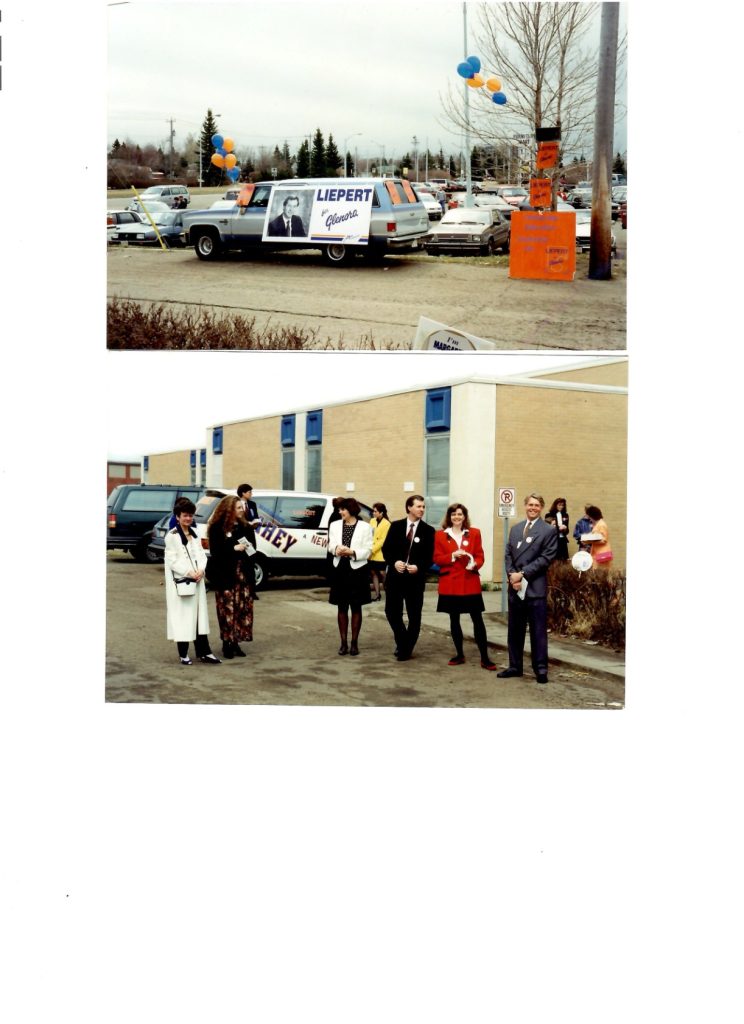
I was relatively new to the Glenora area, which was a huge disadvantage. Before deciding to contest the nomination, I contacted Gwen Harris, a friend of Betkowski and President of the riding association. Gwen was a longtime community and party worker. If she planned to run, I would not. Like Betkowski, she was unhappy with the leadership results and indicated no desire to be part of “Ralph’s team.”
Soon after that discussion she changed her mind and decided to run. There ended up being two other candidates, including Margaret Leahy, who replaced me as the legislative reporter at CITV. In the end Gwen simply had too many connections in the riding and handily won the nomination.
The experience gained by contesting the nomination not only served me well in the future but clearly indicated to the Klein gang that I was part of “Ralph’s team.”
Click here for more stories and pictures of Glenora nomination
With a political career now in the past, it was back working at TELUS full-time. However, being heavily involved in the Betkowski campaign and then running for the party nomination, did not go unnoticed by Klein’s advisors.
A few weeks prior to the drop of the writ I received a phone call from Peter Elzinga, Executive Director of the PC party and Alberta Campaign Manager. He informed me that the candidate in the Edmonton Beverly Highlands constituency had withdrawn and asked me to consider seeking the nomination.
He described me “as the best, unnominated candidate in the city.” I discussed seeking the nomination with some members that I knew on the Highlands Beverly constituency board and received strong support. It meant likely winning an abbreviated nomination race but there was little chance any Conservative could win the riding in a general election.
Nevertheless, I decided to do it, because being part of “Ralph’s Team” would show the party establishment that I wasn’t just a “Betkowski” guy. After winning an abbreviated nomination and I was the candidate of record for the Alberta general election June 16th, 1993.
Our team worked extremely hard during the campaign but the deep-seated dislike for the PC’s in Edmonton, through the Getty years, resulted in a clean sweep for former Edmonton mayor Lawrence Decore and the Liberals. “Ralph’s Team” ended up winning 51 of the 83 seats all outside the Edmonton region and the win became known as “The Miracle on the Prairies.”
Like the failed nomination bid, lessons learned by not winning in a first try at politics would serve me well in the future.
I also made the decision to leave the Glenora board and work with the Highlands Beverly volunteers. Gwen Harris would likely run again in Glenora and if I wanted to seek election in 1997, Highlands Beverly would provide the best opportunity. The aftermath of Betkowski not winning and going away mad left a sour mood in Glenora. Highlands Beverly, on the other hand, was a constituency that could relate to Ralph and ended up being much more enjoyable to work with.
I returned to work at TELUS and was soon part of a strengthened Government Relations team now having a stronger relationship with the new provincial government.